


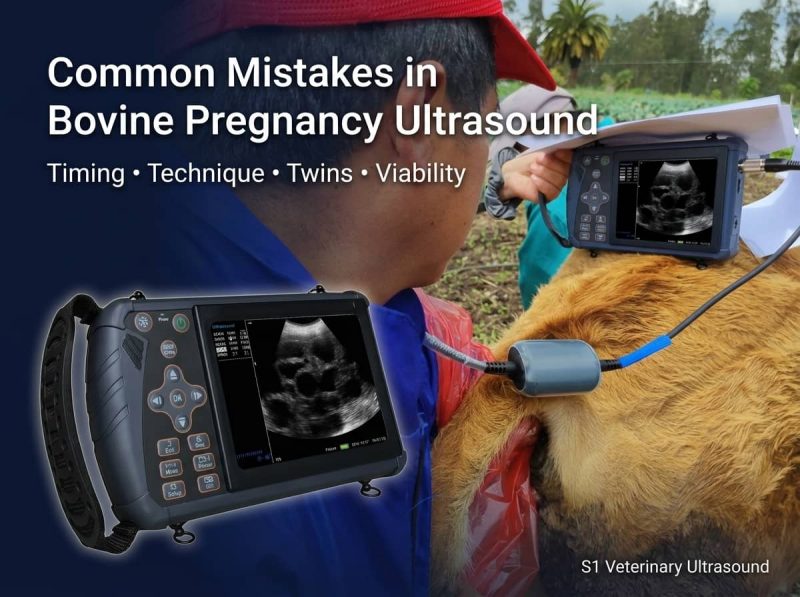
Pregnancy ultrasound can be one of the most profitable “30 seconds per cow” decisions you make all year. It can also be the fastest way to accidentally keep open cows through winter, miss twins, or misjudge calving dates—especially when you’re scanning a long line of cattle, the sun is blasting your screen, and everyone wants to be done before dark.
Whether you are using a Portable Bovine Ultrasound Machine for field work or a high-definition system in the clinic, precision is key. Below are the most common mistakes that show up during cow pregnancy ultrasound (transrectal ultrasonography / TRUS), why they happen, and how to prevent them with a simple, repeatable chute-side routine.
1) Scanning too early (and treating early findings as “final”)
Early diagnosis is tempting. The earlier you know, the sooner you can sort, resync, sell, or tighten your calving window. But scanning too early is where accuracy gets fragile.
-
What goes wrong: A real pregnancy gets missed because the conceptus is still too small to reliably visualize. Conversely, a non-pregnant cow is called pregnant because normal or abnormal uterine fluid looks convincing on a rushed scan.
-
What to do instead: For most field programs, a practical window is around ~30 days post-breeding. If you scan earlier, treat the result as preliminary and plan a confirmation scan for anything questionable.
2) Calling pregnancy based on fluid alone (classic false positives)
Seeing an anechoic (black) pocket of fluid can feel like a “slam dunk pregnancy.” Sometimes it is; sometimes it isn’t.
-
What can mimic pregnancy fluid: Estrus/proestrus uterine fluid, pathologic uterine fluid, or fluid after embryonic loss.
-
What to do instead: Anchor your diagnosis on positive evidence, such as embryo/fetus visualization, fetal parts (later), or a fetal heartbeat. If you can’t get a clean, confident answer, mark the cow as questionable and recheck.
3) Rushing the scan (no system, no sweep, missed findings)
Most scanning errors don’t happen because people “don’t know ultrasound.” They happen because people get hurried. A fast scan without a routine turns into a guessing game.
-
What goes wrong: You scan only the “expected horn,” confirm one finding, and stop. You don’t check the ovaries, so you miss useful context. You don’t re-view from a second angle, so artifacts fool you.
-
What to do instead: Use a simple, repeatable pattern. Identify cervix → uterine body; follow both horns systematically; check both ovaries (CL presence, cysts). Consistency beats speed.
4) Wrong machine settings (gain, depth, frequency)
If you’ve ever said, “I just can’t see anything today,” settings are often the hidden culprit. Just as in Equine Ultrasound Machine or Dog Ultrasound Machine, the image must be optimized for the specific patient.
-
Common setting mistakes: Gain too high (a blizzard of gray speckles) or depth too deep (the uterus is tiny).
-
What to do instead: Start with a Bovine Repro preset. Set depth so the uterus takes up a big portion of the screen. Adjust gain until fluid is truly black, tissue is clean gray, and edges look sharp.

5) Forgetting to assess viability (heartbeat) and ignoring recheck logic
“Pregnant” is not the same as “viable and ongoing.” A practical program separates these two ideas.
-
Common mistakes: Recording “pregnant” without checking for a heartbeat or not explaining that early loss can occur after a positive diagnosis.
-
What to do instead: When the embryo/fetus is visible, check for a fetal heartbeat. Build a real protocol: Initial scan = preg/open; Recheck = questionable cases or high-value cows.
Managing cows that show signs of early embryonic loss
Early embryonic loss can happen for many reasons. The scanning mistake isn’t the loss itself; it’s the sloppy classification or lack of follow-up that follows.
-
What to do instead: Label the outcome correctly. Use a note like “Questionable—possible embryonic loss” rather than “open.” Set a clear recheck window (commonly 7–14 days later). Avoid irreversible decisions like culling until status is confirmed.
6) Missing twins (or not communicating twin risk)
Twins are easy to miss when you stop scanning the second you find “a fetus.” Twins change calving risk and nutritional planning.
-
What goes wrong: Ending the exam right after confirming one fetus or not sweeping the contralateral horn.
-
What to do instead: After you confirm pregnancy, do a deliberate twin-check sweep. Scan both horns fully and use “suspicion triggers” (like multiple CLs) to slow down and verify.
7) Overconfident fetal aging (date errors that cost money)
Fetal aging is valuable but easy to overstate.
-
What goes wrong: Aging off one snapshot or assuming bull-bred vs AI-bred dates without solid records.
-
What to do instead: Use a consistent approach and document it (CRL, skull/orbit, etc.). If calving-date accuracy drives decisions, combine better breeding records with repeat scans.
8) Poor restraint and rough handling (bad images + safety risk)
A calm cow scans better. Whether you are using a specialized Bovine Ultrasound or a multipurpose unit, stability is required for a clear image.
-
Common mistakes: Inadequate chute/headgate setup or using excessive force.
-
What to do instead: Slow is smooth; smooth is safe; safe is fast. Use proper restraint and plenty of lubrication.
9) Hygiene mistakes (cross-contamination and equipment damage)
On a big preg-check day, hygiene is the first thing to slip. It shouldn’t.
-
Common mistakes: Skipping probe cleaning between groups or using the wrong disinfectant that damages the probe surface.
-
What to do instead: Follow the manufacturer’s cleaning guidance. Build a chute-side routine: clean sleeves, clean gel, and regular wipe-downs.
10) Poor records and unclear communication
Even a perfect diagnosis becomes useless if the record is vague. “Preg” isn’t enough anymore.
-
Common mistakes: Recording only “preg” with no age estimate, no notes, or no recheck logic.
-
What to do instead: Use a consistent template (Animal ID, Status, Estimated gestational age, Viability/Heartbeat Y/N, Notes + Recheck date).
FAQ
When is the best time to ultrasound a cow for pregnancy?
Many herds scan around ~30 days after breeding as a practical balance between early decision-making and dependable accuracy. If you scan earlier, plan to confirm uncertain results.
Can ultrasound give a false positive pregnancy in cows?
Yes. Uterine fluid (normal or abnormal) can mimic pregnancy, especially early on. Confirm with positive signs like an embryo/fetus and, when appropriate, a fetal heartbeat.
Can ultrasound detect twins in cattle?
Often yes—but twins can be missed if you don’t intentionally scan both horns and look for a second fetus. A dedicated twin-check sweep improves detection.
Post time: Apr-09-2026