


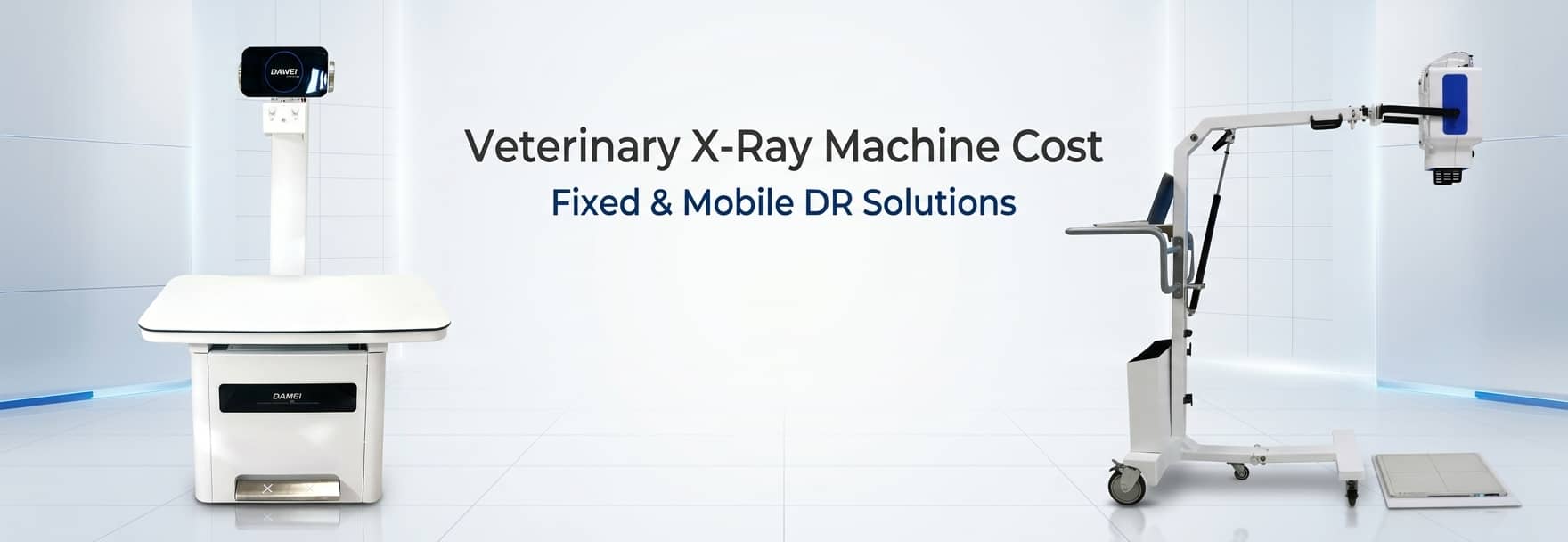
Quick Answer
The cost of a veterinary X-ray machine usually ranges from about $10,000 to $70,000, depending on whether the system is mobile or stationary, whether it is a more basic setup or a more advanced digital radiography system, and what level of image quality, workflow efficiency, and installation support a clinic requires.
In simple terms:
- · Mobile veterinary X-ray machines often fall around $10,000 to $30,000
- · Stationary veterinary X-ray machines often fall around $10,000 to $70,000
- · Systems with faster imaging, better detectors, and more complete software support usually sit at the higher end of the range
That is the short answer. The fuller answer depends on how the machine will be used, what types of animals are being examined, and how advanced the clinic’s imaging workflow needs to be.
Why Veterinary X-Ray Machine Prices Vary So Much
Veterinary X-ray machine prices vary because not all systems are built for the same purpose.
Some clinics need a flexible unit that can be moved from room to room. Others need a dedicated imaging room with a more powerful stationary system. Some only need basic radiography. Others need fast digital imaging, smoother workflow, and better image management.
The main price differences usually come from the following factors.
1. System Type: Portable, Mobile, or Stationary
A portable veterinary X-ray machine is designed for flexibility. It is useful for outpatient use, field work, emergency movement between rooms, and clinics that need imaging without dedicating a full radiography room.
A mobile veterinary X-ray machine offers similar flexibility, often with a wheeled structure or stand that allows easier transport and positioning.
A stationary veterinary X-ray machine is installed in a fixed imaging room. It is generally more suitable for higher-volume clinics and hospitals that need repeatable positioning, greater stability, and a more standardized workflow.
In practice, many clinics start by comparing price first, but end up choosing based on workflow. A portable unit may be the smarter choice for a smaller practice that needs flexibility, while a stationary system often makes more sense for hospitals that handle a larger number of cases every day.
2. Imaging Technology
Traditional systems and digital systems do not offer the same experience.
A more advanced digital system typically allows images to be viewed more quickly, handled more efficiently, and stored more conveniently. This can improve daily workflow, especially in clinics with a steady caseload.
That added efficiency often comes with a higher purchase price. Still, for many veterinary practices, the higher upfront cost can be justified if it reduces retakes, shortens waiting time, and supports a smoother clinical routine.
This is one reason many buyers now look beyond the lowest quote and pay more attention to long-term value. A well-designed veterinary DR system should not only capture a clear image, but also make the whole examination process easier for the doctor, the technician, and the patient.
3. Power and Clinical Capability
Higher-powered systems typically cost more, but they can also handle a broader range of clinical needs.
A system with stronger output may be better suited for different animal sizes, denser anatomy, and more demanding imaging tasks. In practice, this means the machine may be more adaptable and more consistent across a wider variety of cases.
For clinics that examine both companion animals and larger animals, choosing a system with broader capability can be more economical in the long run than purchasing a cheaper machine that quickly feels limiting.
4. Detector Quality
The detector is one of the most important cost factors in a digital veterinary X-ray system.
Detector quality affects:
- · image clarity
- · detail visibility
- · imaging speed
- · workflow efficiency
- · dose performance
Higher-quality detectors usually increase the total system price, but they can also improve diagnostic confidence.
When clinics evaluate different brands, this is often where the real difference begins to show. On paper, two systems may look similar. In actual use, the difference in image sharpness, stability, and speed can feel much larger.
5. Software and Workflow
Modern veterinary imaging is not only about hardware.
Software plays a major role in how efficiently a clinic can register cases, capture images, review studies, store files, and manage examinations over time. Systems with more complete workflow functions generally cost more, but they may save time and reduce friction in daily practice.
That is why many buyers no longer ask only, “How much does the machine cost?” They also ask, “How easy is it to use every single day?” It is a fair question. A machine that looks affordable at first may become expensive if it slows the team down.
Core Article Content
Veterinary X-ray machines are an integral part of modern veterinary medicine and are used to diagnose and treat a variety of animal diseases. Veterinary X-ray machines can take pictures of your pet’s head, chest, abdomen and limbs, and X-rays can be taken to understand the exact location of injuries. These x-ray machines have a wide range of variations between different types, features and brands, and therefore the cost of veterinary x-ray machines varies as a result. There are various types of x-ray machines used by veterinarians, each designed to meet different needs. The main types of veterinary x-ray machines are stationary and mobile.
Stationary Vet X-Ray Machines
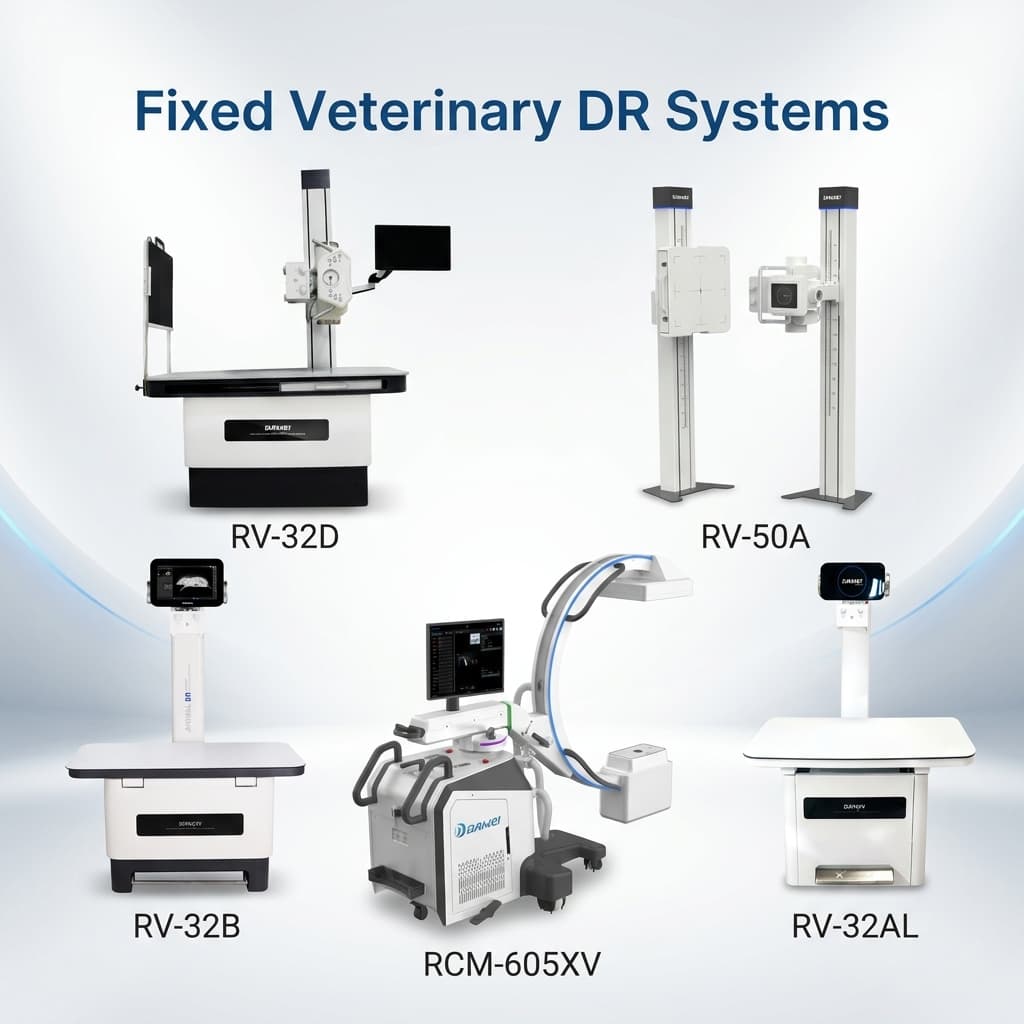
Stationary veterinary x-ray machines are usually installed in a fixed location, usually in the x-ray room of a veterinary clinic or hospital. Compared to a mobile X-ray machine, it does not require frequent movement and setup, making it more suitable for use in a fixed location.
Stationary veterinary x-ray machines usually have a high resolution, providing clear x-ray images that help veterinarians accurately diagnose disease or injury. Some advanced veterinary x-ray machines can also incorporate a veterinary flat panel detector to upgrade the DR system so that images can be seen immediately after photographing the pet. Stationary veterinary X-ray machines range in cost from $10,000 to $70,000. Higher resolution, feature-rich equipment is usually more expensive.
For buyers who prefer a more complete imaging room solution, this type of system is often the better long-term investment. In the market, many modern veterinary DR solutions are now designed not only to improve image quality, but also to make positioning, reviewing, and daily workflow more efficient. That is especially valuable for hospitals that need consistency from one case to the next.
Mobile Veterinary X-Ray Machines
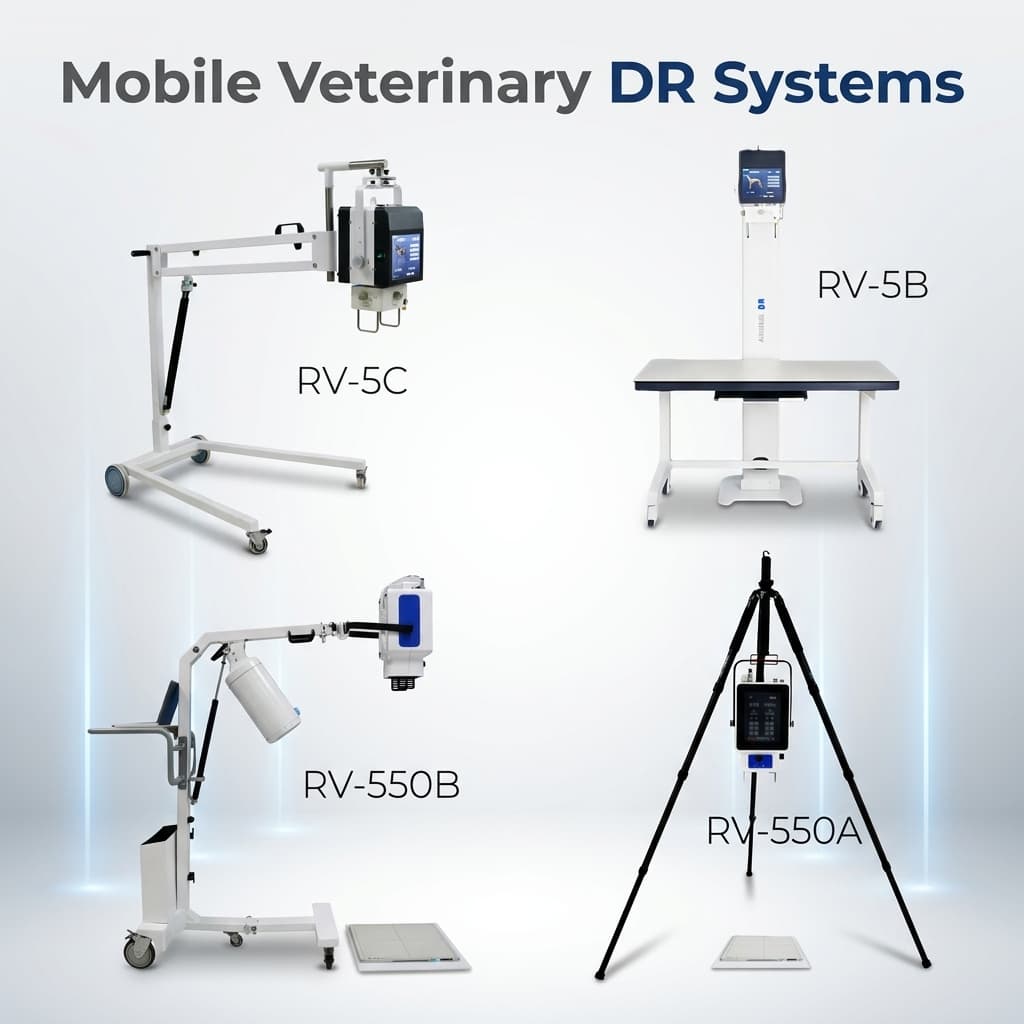
Mobile veterinary x-ray machines are usually equipped with wheels and handles to allow them to be moved to different locations, such as the operating theatre, inside a clinic, to different areas of a veterinary practice or even outdoors to meet different clinical needs. Mobile veterinary x-ray machine equipment can usually be used for different types and sizes of animals such as small pets, large animals and livestock. Modern mobile x-ray machines are often equipped with radiation reduction features to minimise radiation exposure to both the operator and the animal. The cost of a mobile veterinary x-ray machine depends on a number of factors, including manufacturer, model, configuration, imaging features and accessories. Generally, mobile x-ray machines also come in a wide range of prices and may range from $10,000 to $30,000.
For smaller clinics, mobile systems can be a practical entry point into digital imaging. They are often chosen by practices that want to improve diagnostic capability without immediately investing in a full stationary room. When the design is done well, a mobile system can deliver not just flexibility, but also a more comfortable experience for staff working in tighter clinical spaces.
It’s important to note that in addition to the cost of the equipment itself, there are additional costs to consider, such as those associated with equipment installation, maintenance contracts, radiation safety and licensing. Before purchasing a stationary veterinary x-ray machine, make an informed decision based on your actual needs and budget.
If you are considering purchasing veterinary x-ray equipment, it is important to compare system type, performance, image quality, service support, and long-term operating cost before making a final decision.
What a Clinic Is Really Paying For
When a veterinary clinic invests in an X-ray machine, the price usually reflects more than a single piece of equipment.
A buyer may be paying for:
- · the X-ray generator
- · the tube and collimator
- · the detector
- · the table or stand
- · workstation or computer support
- · image acquisition software
- · installation
- · training
- · warranty and after-sales service
- · accessories and optional upgrades
This is why two systems described as “veterinary X-ray machines” can have very different prices.
Reliable suppliers understand this clearly. The real goal is not simply to sell a machine, but to help a clinic choose a configuration that fits its case volume, budget, and working style. That is also why many buyers prefer working with manufacturers that can offer both mobile and stationary veterinary DR solutions rather than pushing a single model regardless of need.
Veterinary X-Ray Machine Cost by Typical Configuration
Here is a practical way to think about pricing.
| Configuration Type | Typical Use Scenario | Typical Price Range |
| Entry-level mobile or portable veterinary X-ray machine | Smaller clinics, lighter workload, flexible room use | $10,000-$20,000 |
| Mid-range digital veterinary X-ray system | Clinics wanting faster image output and smoother workflow | $15,000-$30,000 |
| Standard stationary veterinary X-ray machine | Dedicated X-ray rooms, routine companion-animal imaging | $20,000-$50,000 |
| Advanced stationary digital radiography system | High-volume hospitals with broader imaging needs | $35,000-$70,000+ |
These ranges are only general references. Final pricing depends on configuration, region, shipping, detector level, installation requirements, and service package.
Portable vs. Stationary Veterinary X-Ray: Which Is More Cost-Effective?
The better question is not simply which one is cheaper, but which one makes more sense for the way a clinic actually works.
Portable Veterinary X-Ray Machine
A portable or compact mobile system may be ideal if you need:
- · room-to-room flexibility
- · field imaging
- · lower initial investment
- · simpler deployment
- · use in smaller clinic spaces
For this type of buyer, the best solution is usually one that balances portability with image stability and ease of use. If a system is lightweight but inconvenient in practice, the lower price quickly loses its appeal.
Stationary Veterinary X-Ray System
A stationary system may be the better long-term choice if you need:
- · higher daily imaging volume
- · more stable positioning
- · easier workflow standardization
- · a more complete imaging room setup
- · hospital-level or multi-doctor use
In many cases, the more cost-effective option is the one that best matches the clinic’s real workload rather than the one with the lowest sticker price.
For clinics planning long-term growth, a more advanced stationary DR room can be a strong step forward. It supports a more professional imaging environment, improves consistency, and can elevate the overall standard of care. That is one reason established veterinary hospitals often view imaging equipment as both a diagnostic tool and a service upgrade.
Hidden Costs Buyers Should Not Ignore
The machine price is only one part of the total investment.
A veterinary clinic may also need to budget for:
Installation and Room Preparation
A stationary system may require:
- · electrical preparation
- · shielding considerations
- · room layout adjustments
- · table positioning and workflow planning
Maintenance and Service
Service contracts matter. Downtime affects both revenue and day-to-day clinical efficiency.
This is where supplier support becomes especially important. A lower purchase price can lose its advantage very quickly if technical service is slow or replacement support is difficult to access.
Detector and Software Upgrades
When a clinic moves from a basic setup to a more advanced digital workflow, the detector and software package can significantly affect the final cost.
Compliance and Radiation Safety
Local regulatory requirements may involve licensing, radiation protection checks, and procedural compliance.
Training
Even a good veterinary X-ray machine depends on how confidently and efficiently the team can use it.
How To Choose the Right Veterinary X-Ray Machine for Your Budget
Before buying, ask these questions:
1. What animals do you image most often?
Small animals, large animals, mixed practice, and livestock work may require different capabilities.
2. Do you need portability or a dedicated imaging room?
Portable systems reduce setup barriers. Stationary systems improve repeatability and throughput.
3. How important is image speed?
Faster preview and output can improve clinical efficiency.
4. How advanced does your workflow need to be?
Some clinics need only basic imaging, while others need more complete digital management and review functions.
5. What is your real total budget?
Include installation, accessories, training, maintenance, and support.
6. Can your supplier grow with you?
A good partner should be able to support different clinic sizes and evolving imaging needs, not just sell a single entry-level system.
FAQ
How much does a veterinary X-ray machine cost?
Most veterinary X-ray machines fall somewhere between $10,000 and $70,000, depending on system type, image technology, detector quality, software, and installation requirements.
Why are some veterinary X-ray systems more expensive than others?
The biggest factors are usually system type, power level, detector quality, imaging speed, software functions, and installation requirements.
Is a portable veterinary X-ray machine good enough for a clinic?
Yes, for many clinics it is. A portable or mobile solution can be very practical if the clinic values flexibility, space efficiency, and lower initial investment.
What is the difference between stationary and mobile veterinary X-ray machines?
A stationary system is installed in a fixed room and is typically better for higher-volume and more standardized imaging. A mobile system is easier to move and better suited to flexible use scenarios.
What additional costs should buyers consider?
In addition to the machine itself, buyers should consider installation, maintenance, radiation safety requirements, training, software, and accessories.
Conclusion
So, how much does a veterinary X-ray machine cost?
The practical answer is this: it depends on what kind of clinic you run, what kind of workflow you need, and what level of imaging performance you expect.
If you need flexibility and a lighter upfront investment, a portable or mobile veterinary X-ray machine may be the right fit. If you are building a more advanced imaging room and want stronger performance, a stationary system may offer better long-term value.
For buyers comparing options on the market, it is worth paying attention not only to price, but also to whether the manufacturer understands veterinary workflow, offers dependable support, and provides solutions that match different clinical scenarios. That is where an experienced supplier such as Dawei Veterinary Medical can be a meaningful choice: not because the article needs a hard sales pitch, but because clinics genuinely benefit from working with a company that can provide both flexible mobile systems and more complete stationary DR solutions.
Price matters, but the right choice usually comes down to balancing budget, workflow, image quality, and the real needs of your veterinary practice.
Post time: Sep-25-2023