


Choosing a veterinary ultrasound machine looks easy—until you’re the one responsible for scan quality, workflow speed, staff training, and that awkward moment when a client asks, “So… are you sure?”
Handheld feels effortless. Laptop-style feels reassuring.
Both can be the right answer. Both can also be the wrong purchase if the clinic’s reality doesn’t match the brochure.
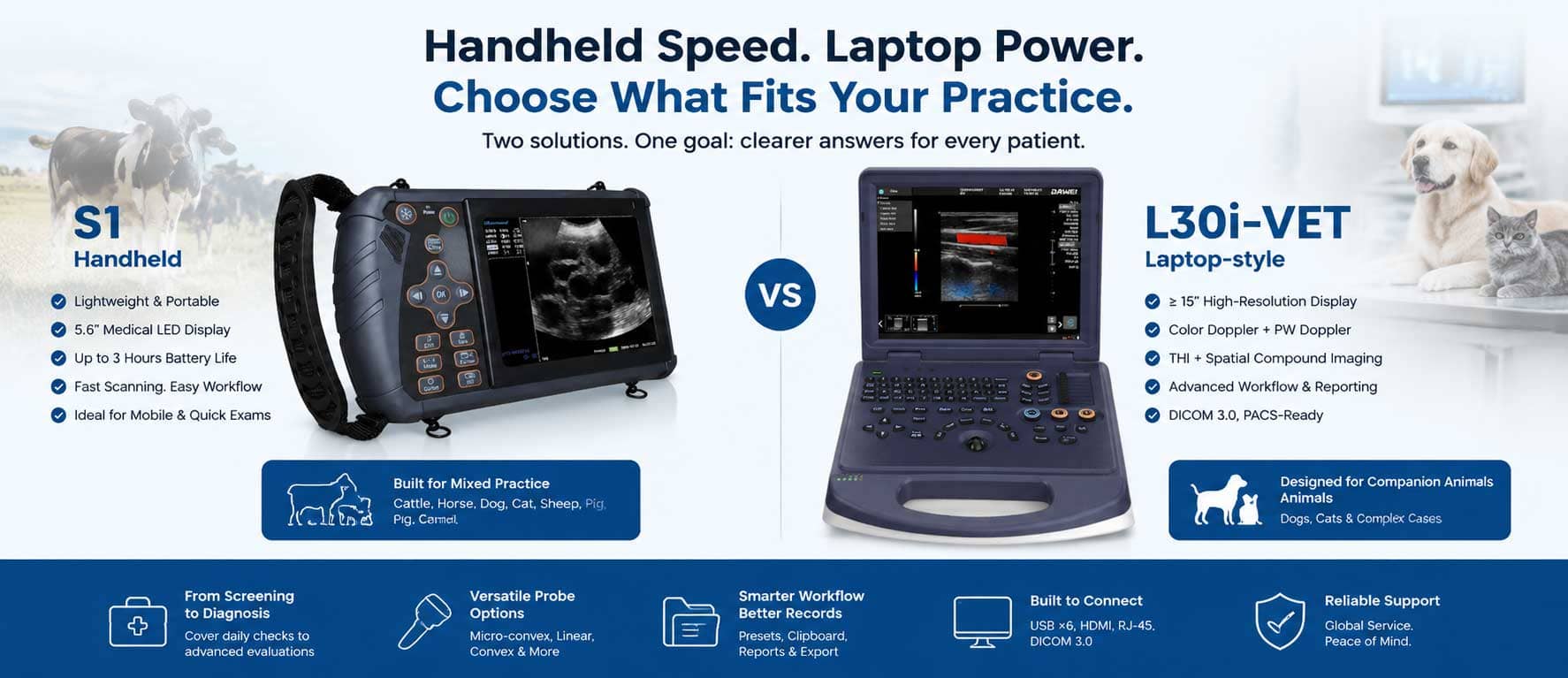
This guide compares S1/Slite (handheld) and L30i‑VET (laptop-style) in the context of daily practice: dogs, cats, and the occasional “we also see farm cases” curveball.
Quick answer (for busy clinics)
- Choose S1 handheld if you need speed, mobility, and simple screening—especially for mobile work, quick rechecks, or space-limited rooms.
- Choose L30i‑VET laptop-style if you need Color Doppler + PW Doppler, stronger workflow tools, reporting, and higher diagnostic confidence for complex cases.
What “handheld” really means in veterinary clinics (S1/Slite)
What “handheld” really means in veterinary clinics (The S-lite Evolution)
Handheld isn’t just “smaller.” It changes behavior. You grab it more often. You scan earlier. You confirm faster.
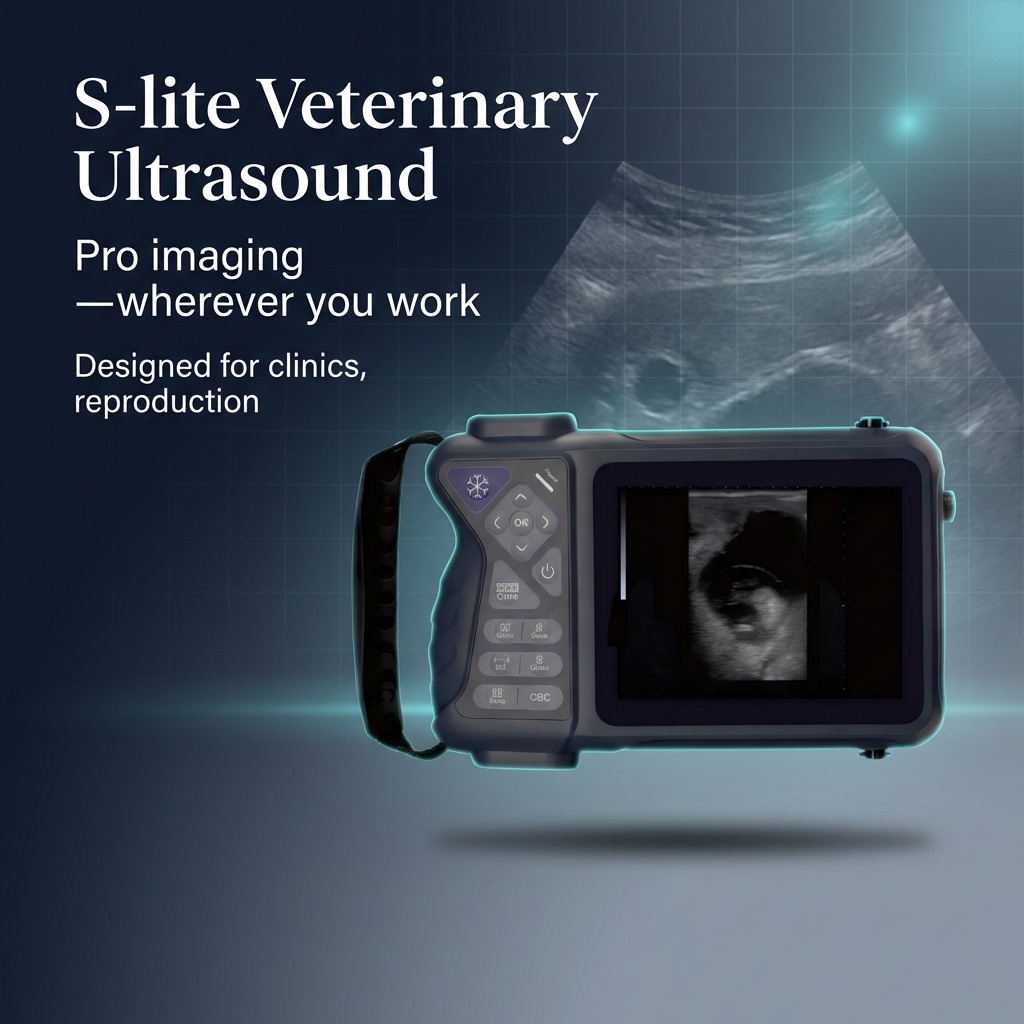
While the S1 has been a staple in the industry for years, the market’s needs have evolved. We have introduced the Slite, a direct upgrade designed to address the common pain points of traditional handhelds.
Slite snapshot (What’s new?)
-
The S1 Legacy, Refined: The Slite maintains the rugged reliability of the S1 but in a more ergonomic package.
-
Enhanced Battery Life: One of the biggest upgrades is the power management system, overcoming the S1’s battery limitations to ensure it lasts through long shifts or remote farm visits.
-
Lightweight Design: It is even more portable than its predecessor, making it the ultimate livestock ultrasound machine for vets who are constantly on the move.
-
Display: High-definition medical LED optimized for outdoor and indoor visibility.
-
Use cases: Specifically optimized for cattle, horse, dog, cat, sheep, pig, and camel (abdominal organs).
In other words: Slite is built for mixed workloads. That matters if your clinic sometimes behaves like a pet clinic… and sometimes like a field unit.
What “laptop-style” really means (L30i‑VET)
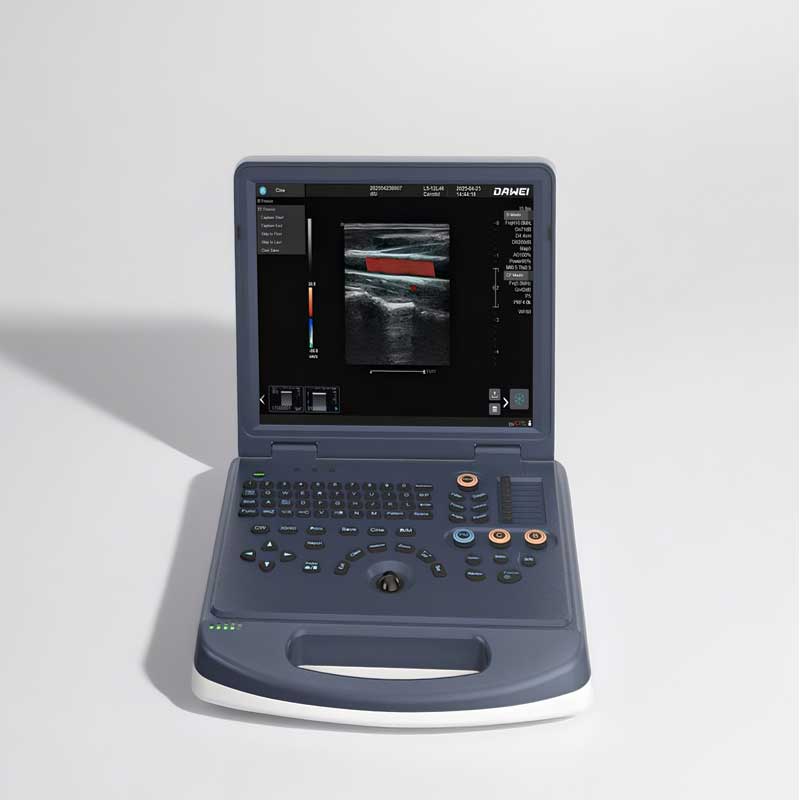
Laptop-style systems sit in the sweet spot: portable enough to move room-to-room, but substantial enough to support deeper imaging workflows.
And for many clinics, the real upgrade is Doppler.
L30i‑VET snapshot (from spec sheet)
- Form factor: laptop-style
- Display: ≥ 15″
- Doppler: PW spectral Doppler + directional power Doppler (per spec)
- Advanced imaging: tissue harmonic imaging (THI) + spatial compound imaging
- Workflow: on-screen clipboard, exam presets, one-key optimization
- Connectivity: DICOM 3.0 (PACS-ready), USB ×6, HDMI ×1, RJ‑45 ×1
- Storage: ≥ 128GB SSD
- Cine loop: ≥ 600 frames
This is the kind of platform clinics choose when they want their imaging to be a system, not a moment.
Handheld vs. Laptop: the comparison that actually matters
1) Mobility vs. diagnostic depth
Handheld: wins on immediacy.
Laptop-style: wins on headroom.
If your clinic mostly needs confirmatory scans—pregnancy checks, bladder checks, quick abdominal sweeps—handheld is often enough. But when you regularly face murmur workups, vascular questions, or “is that structure perfused?” moments, Veterinary Color Doppler Ultrasound becomes more than a feature. It becomes a habit.
2) Screening vs. documentation
A handheld scan can be decisive.
But documentation is a different game.
Laptop-style systems usually give you stronger reporting tools, cleaner export flows, and more consistent presets for staff with different experience levels. In a multi-doctor practice, that consistency is gold.
3) Probe strategy and animal mix
S1 lists a broad animal range—including large animals—because handheld often goes where carts don’t.
If you do farm calls or reproductive work beyond pets, your “pet ultrasound machine” decision can quietly become a cow ultrasound machine requirement. Different scanning conditions. Different ergonomics. Different expectations.
4) Doppler: when it becomes non-negotiable
Let’s be blunt.
If your clinic sees cardiology-related cases, chronic kidney disease, suspected neoplasia, or complicated abdominal presentations, Doppler is not “advanced.” It’s increasingly standard.
Color Doppler plus PW Doppler helps you move from shape to function. And that is often where clinical confidence is built.
Recommended setups by practice type
Mobile vets / space-limited clinics
Start with S1 handheld.
It’s fast. It’s light. It’s easy to deploy. It also trains staff quickly because the workflow is simple.
General companion animal clinics (dogs & cats)
If you want the best balance, the laptop-style route is usually the long-term win.
For clinics specifically looking for a dog ultrasound machine that can handle more than basic screening, Doppler capability matters.
(That product page is a useful reference point when you’re comparing form factors and probe priorities.)
Clinics upgrading to Doppler workflows
Choose L30i‑VET if you want:
- Doppler support (per spec)
- stronger workflow tools (presets, clipboard, reports)
- DICOM/PACS readiness for more structured imaging management
A practical buying checklist (avoid regret purchases)
- Define exams, not features. What do you scan weekly? Abdominal? Urinary? Repro? Cardiac screening?
- Decide if Doppler is required. If yes, shortlist Color Doppler + PW Doppler models.
- Prioritize probes. Micro-convex for small animals is often the daily driver; linear helps for superficial structures.
- Map workflow. Export, report templates, patient records, training.
- Choose a supplier you can live with. Warranty, parts, and response time matter more than one extra mode.
FAQs
Is a handheld ultrasound enough for a pet clinic?
Sometimes, yes—especially for screening. But if you’re growing case complexity or want Doppler workflows, laptop-style often scales better.
Do I need Doppler for routine pet imaging?
Not for every case. But when it’s needed, it’s really needed. Clinics often upgrade when they realize how often Doppler resolves uncertainty.
Can one clinic cover pets and cattle with one device?
Some practices do. In that scenario, handheld mobility and probe choices become critical. Still, workflows differ—treat it as two use cases, not one.
Conclusion
A handheld system like S1 is about speed and access.
A laptop-style system like L30i‑VET pet ultrasound machine is about capability and confidence.
Choose the tool that matches your real day—not your ideal day.
Post time: May-08-2026