


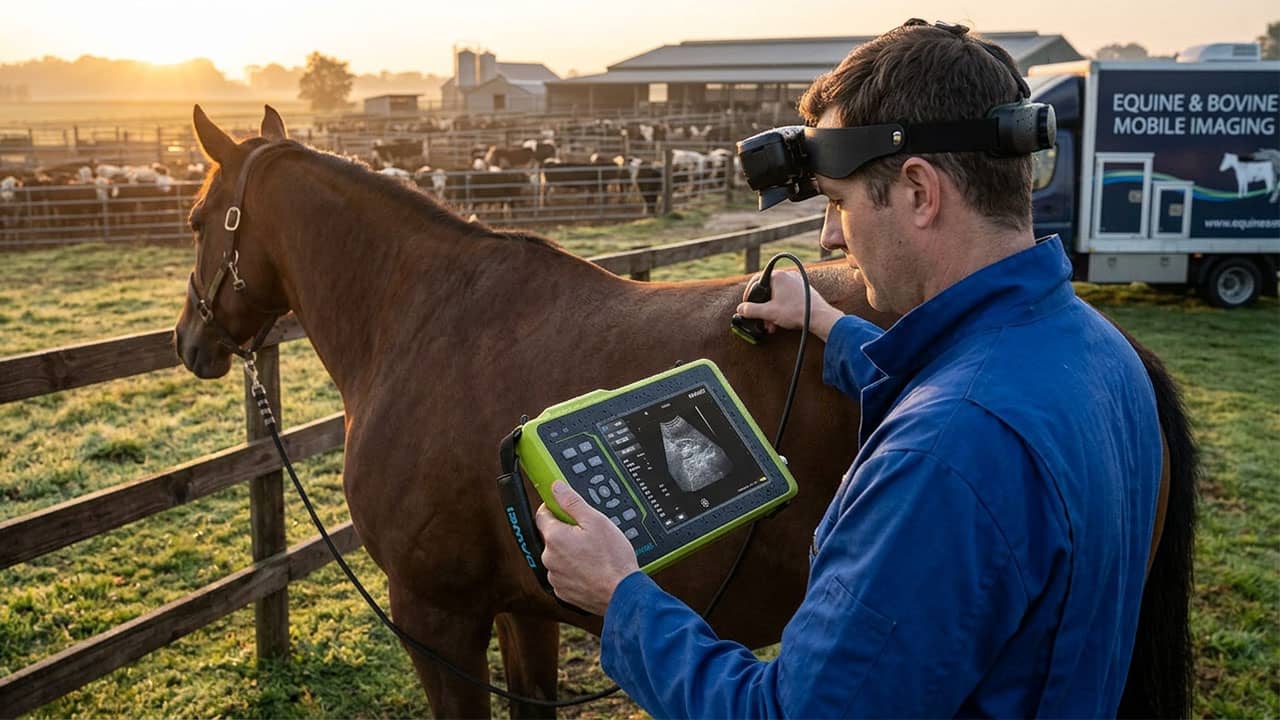
Field veterinary imaging is unforgiving. One minute you are scanning a mare in a dim barn aisle; the next, you are working in a wet cattle handling area with dust, glare, mud, and very little time to spare. For equine and bovine mobile vets, the best imaging equipment is not simply portable. It has to be durable, washable, fast to deploy, easy to read outdoors, and reliable enough to keep moving from case to case.
That is why the conversation around equine ultrasound machines and large-animal imaging has shifted. Mobile practitioners are no longer just comparing image quality. They are comparing total field readiness: waterproofing, probe flexibility, battery endurance, screen visibility, workflow speed, and how easily a device fits real farm calls.
In that context, a rugged portable vet ultrasound machine often becomes the centerpiece of the mobile imaging setup. And for vets who need a waterproof ultrasound scanner for horses and cattle, the DAWEI Y6 deserves a natural place in the shortlist.
At a Glance
- Best use case: equine and bovine mobile imaging in demanding field conditions
- Most important buying factors: waterproof housing, long battery life, practical probe options, clear display, and rapid cleaning between visits
- Core imaging jobs: pregnancy checks, reproductive exams, abdominal screening, and selected musculoskeletal scans
- Why Y6 is relevant: it combines a waterproof handheld design, an 8-inch HD display, multi-mode imaging, and probe options that make sense for large-animal practice
Why Rugged Imaging Matters in Equine and Bovine Mobile Practice
For a small-animal clinic, portability may mean moving between rooms. For a large-animal vet, portability means climbing in and out of trucks, scanning in open yards, working around moisture and organic debris, and making decisions fast while the patient, the owner, and the environment keep moving.
That is especially true for:
- Equine reproductive work, where timing and image clarity matter early in gestation
- Bovine herd checks, where efficiency determines how many animals can be scanned in a day
- Field musculoskeletal exams, where tendons, ligaments, and superficial structures must be assessed on site
- Mixed farm calls, where one machine may need to move from cattle to horses and then to small ruminants without slowing the day down
In short, the best equine ultrasound machine for a mobile vet is rarely the fanciest machine on paper. It is the one that still performs after a long day in a wet, bright, dirty, unpredictable environment.
The Best Rugged Equipment Stack for Mobile Field Imaging
If you ask experienced large-animal vets what matters most, they usually do not start with marketing language. They start with friction points: weak batteries, hard-to-clean housings, limited probes, cables that get in the way, or screens that disappear in sunlight. So when evaluating rugged field imaging equipment, focus on this stack.
1. A Waterproof Handheld Ultrasound Platform
For most equine and bovine ambulatory workflows, ultrasound is the imaging tool that earns its keep every single week. A true field-ready platform should be:
- compact enough for one-person transport
- durable enough for repeated outdoor use
- simple to disinfect or rinse down
- quick to boot and scan
- adaptable enough for both reproductive and general large-animal exams
This is where a dedicated portable ultrasound machine for livestock becomes more valuable than a generic portable unit designed for cleaner indoor settings.
2. Probe Flexibility for Real Cases
Equine and bovine work is probe-dependent. A machine may look good in a brochure, but if the available probes do not match your case mix, it will become a compromise almost immediately.
For field imaging, useful options include:
- rectal linear probes for reproductive work with high-detail near-field imaging
- rectal convex probes for broader field-of-view exams and selected abdominal tasks
- linear probes for tendons, ligaments, and superficial soft tissue
- convex probes for abdominal screening in larger animals
A rugged equine ultrasound scanner should support the probes your ambulatory workflow actually uses, not just the ones that look versatile on a spec sheet.
3. Battery Life That Matches the Route
Battery life sounds boring until you are halfway through a herd check. In mobile practice, it is not a convenience feature. It is operational insurance.
As a rule, field vets should look for enough power to cover multiple exams without worrying about the next outlet. The Y6, for example, is positioned with a 6600mAh battery and roughly 6 hours of operation, which is far more aligned with farm reality than short-session clinic hardware.
4. Outdoor Visibility and One-Hand Practicality
Mud happens. Sun glare happens. Gloves happen. If a system needs perfect indoor conditions, it is not really built for field practice.
Look for:
- a display large enough to review anatomy quickly
- controls that can be used with minimal friction
- a shape and weight that work in constrained spaces
- accessories or viewing options that help in bright environments
5. Easy Cleaning Between Calls
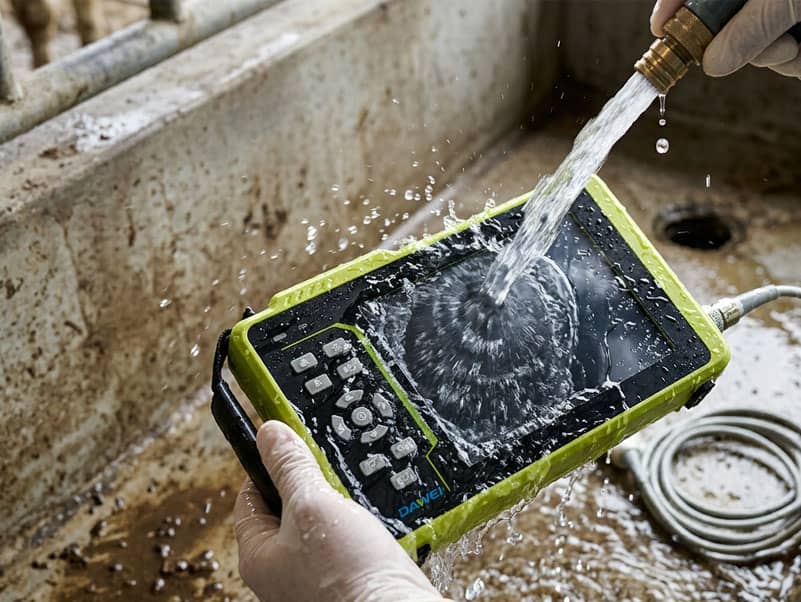
Biosecurity is not a side note. On large-animal routes, it is part of the job. A unit that can be cleaned quickly and confidently helps protect workflow as well as herd health.
That is one reason the phrase waterproof ultrasound scanner matters so much more in farm practice than it does in generic device marketing.
What Mobile Equine Vets Need Most
When people search for equine ultrasound machines, they are often really searching for confidence in a few specific tasks.
Reproductive Scanning
Early pregnancy confirmation, twin identification, monitoring embryonic development, and following gestational progress all demand dependable image acquisition in the field. A capable equine ultrasound machine has to deliver clear real-time imaging without requiring a perfect clinic setup.
Tendon and Ligament Assessment
For sports medicine and performance horses, musculoskeletal imaging is often time-sensitive. A mobile vet may need to scan immediately after a new injury or during follow-up management. That puts extra value on a machine that is portable, durable, and compatible with linear probes.
Farm-to-Farm Reliability
Equine ambulatory work often means repeated loading, unloading, and scanning across long days. A machine that looks sleek but does not handle rough use is not a great investment. A rugged handheld system, by contrast, is built for the life it will actually live.
What Bovine Mobile Vets Need Most
Bovine imaging is all about throughput, resilience, and practical ergonomics.
Fast Pregnancy Checks
For herd work, speed matters. The right portable ultrasound machine for livestock should help the vet move smoothly from animal to animal while maintaining image quality and exam consistency.
Reproductive and Abdominal Utility
Cattle work may include uterine assessment, ovarian evaluation, pregnancy aging, and broader abdominal imaging depending on the workflow. That means depth penetration, probe choice, and field durability all matter at once.
Washable Design in Dirty Environments
Cattle handling areas are not gentle on electronics. A portable vet ultrasound machine that tolerates wet and dusty conditions is not a luxury; it is part of staying operational.
Where the DAWEI Y6 Fits Naturally
Among rugged handheld options, the DAWEI Y6 waterproof ultrasound scanner stands out because its feature set lines up with the actual needs of equine and bovine ambulatory work, rather than just sounding portable in theory.
Based on the official product and related field-use pages, the Y6 is positioned around several practical strengths:
- Waterproof handheld design for wet, dusty, and hard-to-control farm environments
- 8-inch medical HD display for clearer viewing in active field workflows
- Multi-mode imaging including B, BB, 4B, BM, and M modes
- Approx. 6-hour runtime supported by a 6600mAh battery
- 32GB storage with replay support for case review and documentation
- Probe support for rectal linear, rectal convex, convex, and linear applications depending on configuration
- Use across species, including horses, cattle, sheep, pigs, dogs, and cats
In other words, the Y6 is not just relevant because it is handheld. It is relevant because it addresses the exact pain points that make or break field imaging: cleaning, portability, reproductive workflow, battery endurance, and probe versatility.
If your readers are specifically comparing rugged equine ultrasound scanners for mobile use, a contextual internal link such as portable equine and bovine ultrasound solution: DAWEI Y6 feels natural and useful, not forced.
Buying Checklist for a Rugged Equine or Bovine Imaging Unit
Before choosing among equine ultrasound machines or livestock handheld scanners, use this quick checklist:
| What to evaluate | Why it matters in the field | Y6 relevance |
|---|---|---|
| Waterproof or water-resistant body | Faster cleaning, better resilience, less downtime | Strong fit |
| Battery endurance | More scans per route, fewer charging interruptions | Approx. 6 hours |
| Probe availability | Reproductive, abdominal, and musculoskeletal versatility | Broad large-animal fit |
| Display size and readability | Faster decisions in barns and outdoor conditions | 8-inch HD screen |
| Storage and replay | Better follow-up and case documentation | 32GB + replay |
| Mobility | Easier carrying, setup, and scanning in tight spaces | Handheld format |
The best rugged equipment for equine and bovine mobile vets is equipment that reduces friction in the real world. It should survive wet conditions, move easily, scan quickly, support the right probes, and stay useful through a full day of field calls.
That is exactly why handheld systems continue to gain attention in searches around equine ultrasound machine, portable vet ultrasound machine, and portable ultrasound machine livestock. And it is why the DAWEI Y6 can be introduced naturally in this conversation: it matches the practical demands that mobile equine and bovine vets deal with every day.
FAQ
What makes a good field ultrasound unit for equine vets?
A good field unit for equine practice should be portable, durable, easy to clean, readable outdoors, and compatible with the probes needed for reproductive and musculoskeletal work.
Why does waterproofing matter for bovine mobile imaging?
Bovine work often happens in wet, dirty, high-throughput environments. A waterproof or highly water-resistant design makes cleaning easier, improves biosecurity workflow, and lowers the risk of equipment downtime.
Is a handheld scanner enough for large-animal work?
In many ambulatory workflows, yes. A handheld scanner can be highly effective if it offers the right probe support, sufficient image quality, battery endurance, and rugged construction.
When should I consider the DAWEI Y6?
The Y6 is worth considering when your priority is a rugged large-animal field scanner for horses and cattle, especially if you value waterproofing, portability, and reproductive-workflow practicality.
Post time: Jun-25-2026