


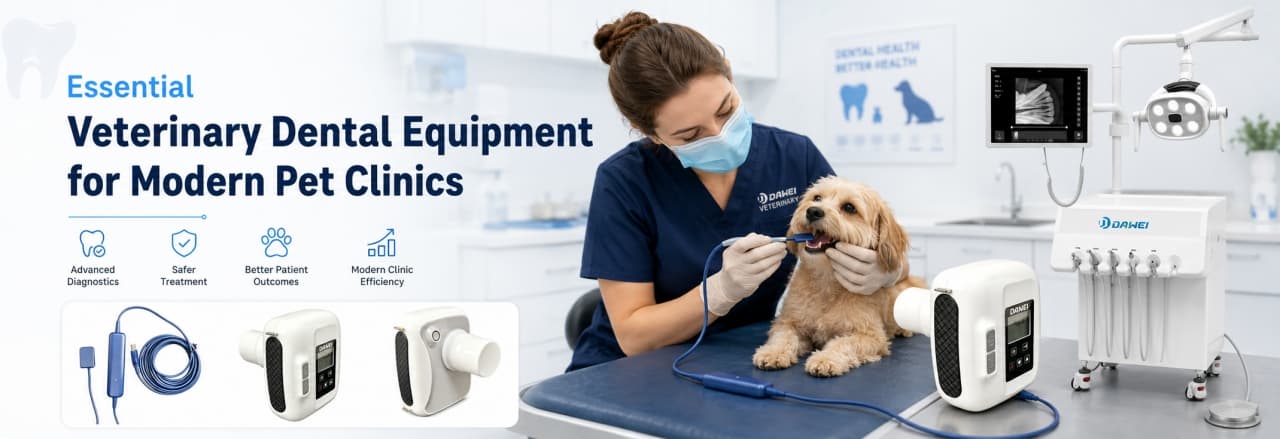
Dental health plays an important role in overall animal health. Dogs and cats commonly suffer from periodontal disease, tooth fractures, oral infections, and other dental problems. However, many dental issues cannot be fully evaluated through visual examination alone.
A professional veterinary dental setup allows veterinarians to diagnose oral problems accurately, perform effective treatments, and improve clinical workflow.
For modern veterinary clinics, choosing the right dental equipment is essential for providing complete oral care for companion animals.
Why Veterinary Dental Equipment Matters in Pet Clinics
Veterinary dental care requires more than simple cleaning.
A complete dental examination may involve:
- Oral examination
- Dental imaging
- Tooth cleaning and scaling
- Polishing
- Tooth extraction
- Root evaluation
- Periodontal disease assessment
With professional veterinary dental equipment, veterinarians can improve diagnostic accuracy and provide safer treatment for dogs and cats.
Essential Veterinary Dental Equipment for a Complete Dental Room
1. Veterinary Dental X-Ray System
Dental radiography is one of the most important tools in modern veterinary dentistry.
A veterinary dental X-ray system allows veterinarians to evaluate:
- Tooth roots
- Periodontal structures
- Hidden dental lesions
- Bone loss
- Oral abnormalities
Compared with traditional visual examination, dental X-ray provides deeper information about structures below the gum line.
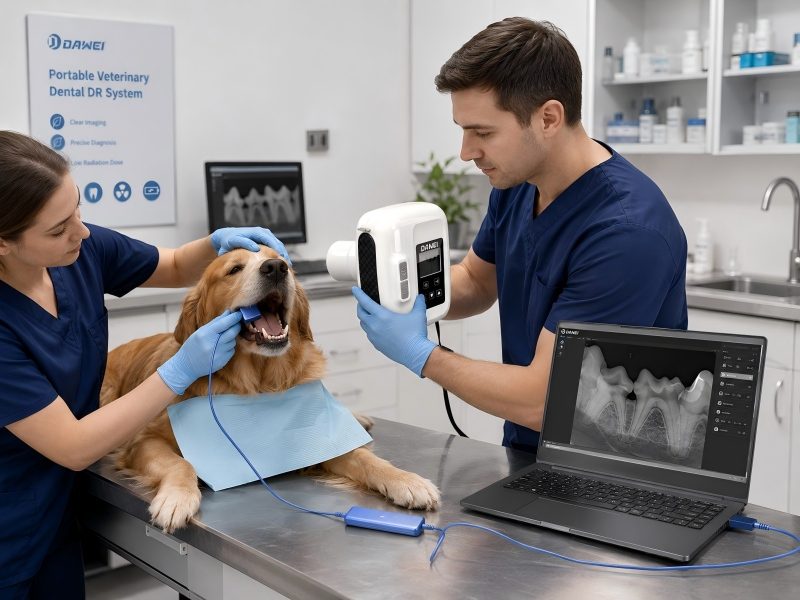
Veterinary dental X-ray system with digital sensor
2. Veterinary Dental Unit
A veterinary dental unit is the central workstation for professional dental treatment.
A complete dental unit integrates multiple functions:
- High-speed handpiece
- Low-speed handpiece
- Ultrasonic scaler
- Three-way syringe
- Saliva ejector
- Foot pedal control
The ADP-200 Veterinary Mobile Dental Workstation is designed for veterinary clinics that need an integrated solution for dental cleaning, polishing, and oral treatment procedures.
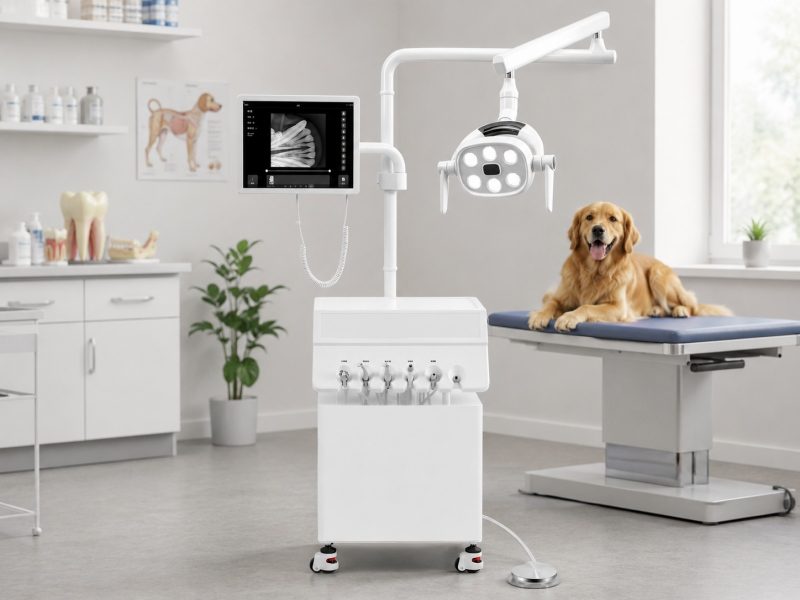
ADP-200 veterinary dental workstation
3. Ultrasonic Scaler for Veterinary Dental Cleaning
Dental scaling is an important part of routine oral care.
Ultrasonic scalers help veterinarians remove:
- Dental calculus
- Plaque
- Surface stains
Combined with polishing procedures, ultrasonic scaling helps maintain better oral hygiene for companion animals.
4. Intraoral Camera for Dental Communication
An intraoral camera helps veterinarians capture detailed images inside the animal’s mouth.
Benefits include:
- Better examination visualization
- Easier communication with pet owners
- Dental record documentation
Digital images can help owners better understand their pet’s oral condition and treatment recommendations.
How to Build a Complete Veterinary Dental Room
A modern veterinary dental room usually includes:
| Equipment | Purpose |
|---|---|
| Dental X-Ray System | Dental imaging and diagnosis |
| Dental Unit | Dental treatment workflow |
| Ultrasonic Scaler | Cleaning and calculus removal |
| Intraoral Camera | Oral visualization |
| Anesthesia & Monitoring Equipment | Patient safety during procedures |
A complete dental setup helps veterinary clinics provide professional oral care from diagnosis to treatment.
FAQ
What dental equipment does a veterinary clinic need?
A professional veterinary dental setup usually includes dental X-ray systems, dental units, ultrasonic scalers, intraoral cameras, and patient monitoring equipment.
Why do veterinarians need dental X-rays?
Dental X-rays allow veterinarians to examine tooth roots and structures below the gum line that cannot be seen during a normal oral examination.
What is a veterinary dental unit used for?
A veterinary dental unit integrates dental instruments such as handpieces, scalers, syringes, and suction systems for professional animal dental treatment.
Post time: Jul-23-2026