


 Introduction
Gastrointestinal diseases are common in dogs and cats, and identifying the underlying cause can sometimes be challenging. Symptoms such as persistent vomiting, regurgitation, difficulty swallowing, appetite changes, and unexplained weight loss may indicate problems affecting the digestive tract.
Veterinary gastrointestinal endoscopy is a minimally invasive diagnostic technique that allows veterinarians to examine the inner surfaces of the digestive tract using a flexible endoscope equipped with an imaging system.
Compared with conventional diagnostic approaches, endoscopy provides direct visualization of gastrointestinal structures and may allow veterinarians to collect tissue samples or perform selected therapeutic procedures when compatible instruments are available.
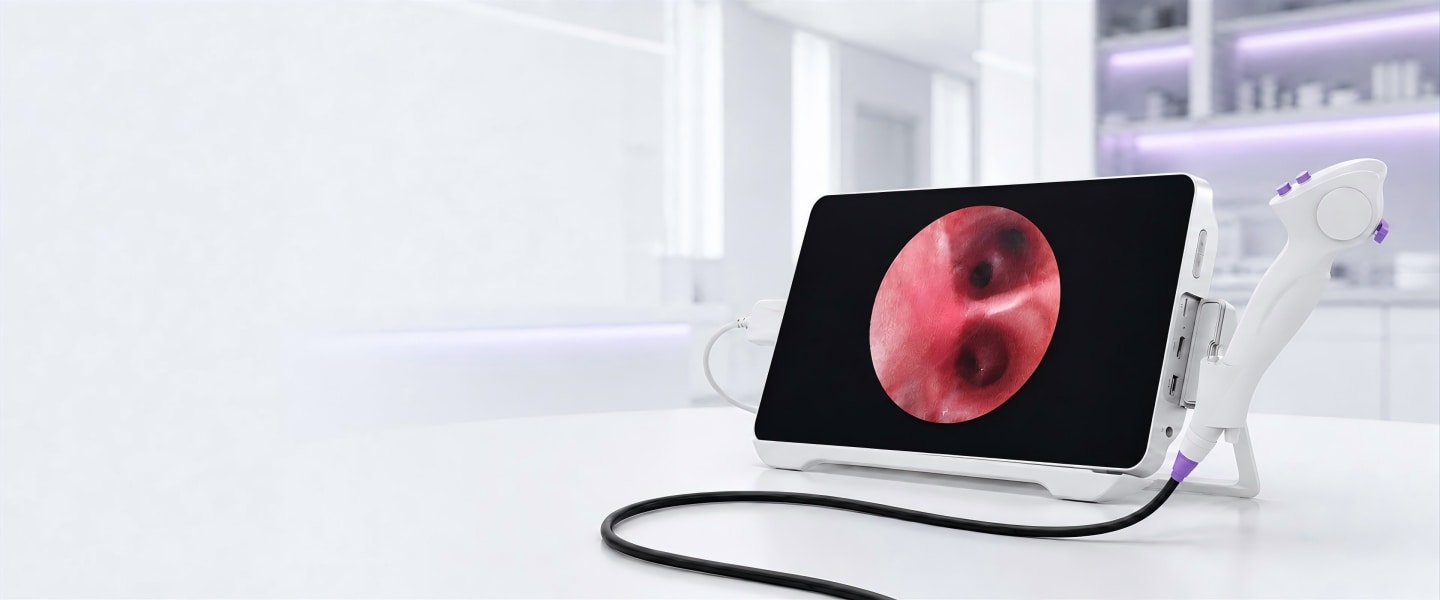
With advances in veterinary endoscopic technology, portable systems such as the Dawei AEG-180 Veterinary Endoscope offer another option for veterinary professionals performing endoscopic examinations in suitable animal patients.
1. What Is Gastrointestinal Endoscopy in Dogs and Cats?
Gastrointestinal endoscopy is a diagnostic procedure that uses a flexible endoscope to examine the digestive tract.
In dogs and cats, upper gastrointestinal endoscopy is generally performed by introducing the endoscope through the mouth to examine structures such as:
- Esophagus: Evaluation of swallowing disorders, inflammation, strictures, and foreign bodies.
- Stomach: Examination of the gastric mucosa, inflammation, ulcers, and suspicious lesions.
- Proximal small intestine: Assessment of visible abnormalities in the accessible portions of the small intestine.
Lower gastrointestinal endoscopy, including colonoscopy, uses a different insertion route to examine the rectum and colon.
The examination method and equipment configuration depend on the suspected disease, the animal’s size, and the veterinarian’s clinical assessment.
2. When Do Dogs and Cats Need Gastrointestinal Endoscopy?
Veterinarians may recommend gastrointestinal endoscopy when clinical signs persist or when other diagnostic examinations do not provide sufficient information.
2.1 Persistent Vomiting and Regurgitation
Repeated vomiting or regurgitation can be associated with various gastrointestinal conditions.
Endoscopy allows direct examination of accessible gastrointestinal mucosal surfaces, helping veterinarians identify visible abnormalities such as inflammation, erosions, ulcers, or other suspicious changes.
2.2 Suspected Gastrointestinal Foreign Bodies
Dogs, in particular, may accidentally swallow toys, bones, fabric, and other foreign objects.
When a foreign body is suspected in the esophagus or stomach, endoscopy may help locate and assess the object. In selected cases, removal may be possible using compatible retrieval accessories.
The appropriate treatment depends on the object’s size, shape, location, and the patient’s condition.
2.3 Gastric Inflammation and Ulcers
Gastritis and gastric ulceration can cause vomiting, discomfort, and reduced appetite.
Gastrointestinal endoscopy provides direct visualization of the gastric mucosa, allowing veterinarians to examine areas of redness, erosion, ulceration, or other visible abnormalities.
2.4 Unexplained Weight Loss and Chronic Digestive Problems
Dogs and cats experiencing chronic diarrhea, appetite changes, or unexplained weight loss may require further gastrointestinal investigation.
Depending on the suspected condition, veterinarians may use upper gastrointestinal endoscopy, colonoscopy, imaging, laboratory tests, or tissue sampling to support diagnosis.
3. What Can Veterinary Gastrointestinal Endoscopy Help Identify?
Endoscopy provides direct visual information about accessible gastrointestinal surfaces.
Common clinical applications include:
| Clinical concern | Potential endoscopic application |
|---|---|
| Esophageal foreign bodies | Visualization and assessment of foreign objects |
| Gastritis | Examination of gastric mucosal abnormalities |
| Gastric ulcers | Direct visualization of suspected ulcerative lesions |
| Esophageal inflammation | Assessment of visible inflammatory changes |
| Gastrointestinal bleeding | Investigation of potential visible bleeding sources |
| Suspected gastrointestinal masses | Visualization and assessment of suspicious lesions |
| Chronic digestive disorders | Support for further diagnostic investigation |
It is important to note that endoscopic findings alone do not establish every diagnosis. Biopsy, histopathology, laboratory testing, and additional imaging may be necessary depending on the clinical situation.
4. Key Features of the Dawei AEG-180 Veterinary Endoscope
Selecting an appropriate veterinary endoscope involves considering the insertion tube diameter, working channel, bending capability, field of view, and imaging performance.
The Dawei AEG-180 Portable Veterinary Endoscope is designed for veterinary endoscopic applications and features a compact endoscopic design.
Its demonstrated specifications include:
Ultra-Slim 2.5 mm Insertion Tube
With a 2.5 mm insertion tube diameter, the AEG-180 offers a slim endoscopic design for suitable veterinary examination applications.
The appropriate scope diameter should always be selected according to the animal’s size, anatomy, and examination requirements.
1.2 mm Working Channel
The integrated 1.2 mm working channel allows the use of compatible endoscopic accessories, subject to accessory dimensions and configuration.
Working-channel compatibility should be confirmed before selecting biopsy or retrieval instruments.
275° Up/Down Bending
The AEG-180 features 275° up/down bending capability, supporting directional control during endoscopic examination.
Flexible bending helps veterinarians adjust the viewing direction when examining accessible internal structures.
120° Wide Field of View
A 120° field of view provides a broad visual perspective during examination, helping veterinarians observe the surrounding internal structures.
160,000-Pixel Imaging
The AEG-180 features a 160,000-pixel imaging system for displaying internal structures during endoscopic procedures.
Clear visualization is important when examining mucosal surfaces and identifying visible abnormalities.
5. AEG-180 Veterinary Endoscopy Demonstration in a Dog
The following video demonstrates the Dawei AEG-180 Portable Veterinary Endoscope being used during an endoscopic procedure in a dog.
The demonstration highlights the practical use of the endoscope, its flexible insertion tube, directional control, and real-time endoscopic imaging.
The video also introduces several key specifications, including the 2.5 mm insertion tube, 1.2 mm working channel, 275° up/down bending, 120° field of view, and 160,000-pixel imaging.
This real-world demonstration provides veterinary professionals with a closer look at the device’s design and operation.
The specific anatomical examination site and clinical diagnosis are not identified in the video.
6. What Should Veterinarians Consider When Choosing an Endoscope?
Choosing a veterinary endoscope requires more than comparing technical specifications.
Veterinary professionals should consider the following factors:
1. Animal size and anatomy
The endoscope diameter and insertion length should be appropriate for the intended animal species and examination site.
2. Examination requirements
Different procedures may require different scope configurations. Gastrointestinal, respiratory, and other endoscopic applications should be evaluated separately.
3. Working channel and accessories
If tissue sampling or foreign body retrieval is required, veterinarians should confirm that the working channel is compatible with the intended instruments.
4. Image quality and field of view
Clear images and an appropriate field of view help veterinarians observe internal structures during examination.
5. Flexibility and maneuverability
Bending capability and control are important when navigating anatomical pathways.
6. Cleaning and disinfection
Veterinary endoscopes must be cleaned and reprocessed according to the manufacturer’s instructions and applicable infection-control protocols.
7. Frequently Asked Questions About Dog and Cat Endoscopy
Q1: What is a veterinary gastrointestinal endoscope used for?
A veterinary gastrointestinal endoscope is used to examine the internal surfaces of the digestive tract in animals. It can help investigate conditions such as esophageal foreign bodies, gastric inflammation, ulcers, and suspicious gastrointestinal lesions.
Q2: Can an endoscope detect stomach problems in dogs?
Yes. Upper gastrointestinal endoscopy allows veterinarians to directly examine the esophagus and stomach, helping identify visible abnormalities such as inflammation, erosions, and ulcers.
Q3: Is gastrointestinal endoscopy suitable for cats?
Yes. Gastrointestinal endoscopy is used in both dogs and cats. However, the endoscope diameter, insertion length, and examination method must be appropriate for the individual animal.
Q4: Can veterinary endoscopy remove foreign bodies?
In selected cases, endoscopy can be used to retrieve foreign bodies from accessible areas of the gastrointestinal tract. The procedure requires compatible retrieval instruments and must be evaluated by a qualified veterinarian.
Q5: Can an endoscope collect tissue samples?
Some veterinary endoscopes support biopsy procedures through a working channel when compatible biopsy forceps are available. The working-channel diameter and accessory compatibility must be checked before use.
Q6: What should I consider when purchasing a veterinary endoscope?
Important considerations include insertion tube diameter, working-channel size, bending capability, field of view, imaging performance, accessory compatibility, and the intended animal species.
Conclusion
Gastrointestinal endoscopy is an important diagnostic tool in small animal veterinary medicine. It allows veterinarians to examine accessible digestive tract structures directly and supports the investigation of various gastrointestinal conditions in dogs and cats.
For veterinary clinics and animal hospitals looking for portable endoscopic solutions, the Dawei AEG-180 offers a compact 2.5 mm insertion tube, a 1.2 mm working channel, 275° up/down bending, a 120° field of view, and 160,000-pixel imaging.
Choosing the right veterinary endoscope according to clinical requirements and animal anatomy can help veterinary professionals perform appropriate endoscopic examinations.
Looking for a veterinary endoscope for your clinic?
Explore Dawei Veterinary Medical’s veterinary endoscopy solutions and contact our team for product information, technical specifications, and application details.
Post time: Nov-27-2026