


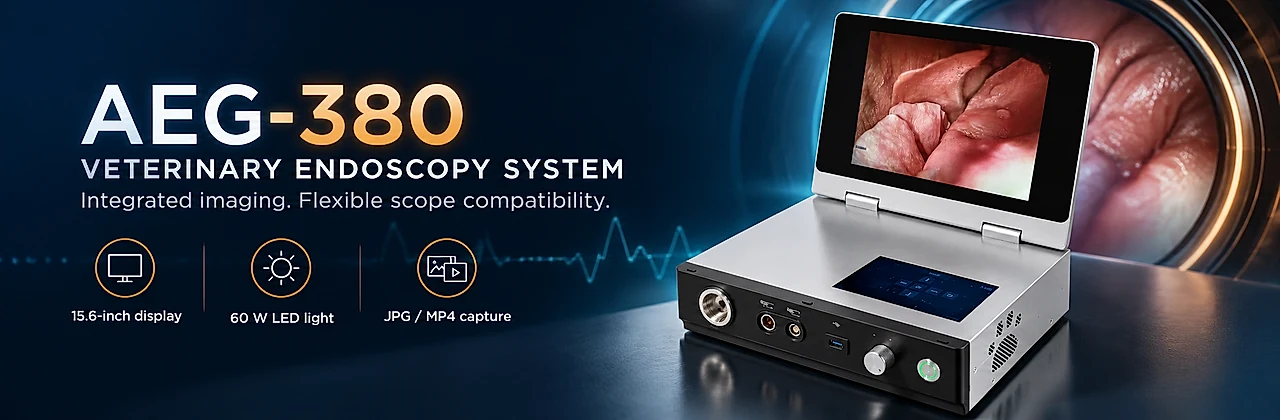
Respiratory conditions in dogs can involve different parts of the airway, including the trachea and bronchi. When further visual examination is required, veterinary bronchoscopy provides a way for veterinarians to observe the internal airway structures using a flexible endoscope.
With real-time endoscopic imaging, veterinarians can examine airway surfaces, observe visible abnormalities, and document findings during the procedure. The Dawei AEG-380 All-in-One Veterinary Endoscopy System provides an integrated imaging platform for compatible veterinary airway endoscopy applications.
What Is Canine Bronchoscopy?
Canine bronchoscopy is an endoscopic examination used to visualize the inside of a dog’s respiratory tract. A flexible bronchoscope is introduced into the airway under appropriate veterinary supervision, allowing the clinician to observe the tracheal and bronchial structures on a monitor.
Unlike external imaging methods, bronchoscopy provides direct visualization of the airway lumen and its mucosal surfaces.
During an examination, veterinarians may assess:
- The appearance of the tracheal lining
- Visible bronchial structures and branching
- Airway narrowing or structural abnormalities
- Mucus and other visible secretions
- Changes in the airway mucosal surface
The examination findings should always be interpreted together with the patient’s clinical history and other diagnostic information.
When Is Bronchoscopy Used in Dogs?
Veterinarians may consider bronchoscopy when a dog presents with respiratory signs that require further airway evaluation.
Common clinical situations include:
- Persistent or unexplained coughing
- Suspected airway foreign bodies
- Suspected tracheal or bronchial abnormalities
- Evaluation of visible airway secretions
- Further investigation of selected respiratory conditions
The decision to perform bronchoscopy depends on the patient’s condition, clinical findings, and the veterinarian’s assessment.
What Can Veterinarians Observe During Bronchoscopy?
One of the main advantages of bronchoscopy is the ability to observe airway structures directly.
1. Tracheal Examination
The trachea can be examined for visible changes in its internal surface, shape, and lumen.
2. Bronchial Visualization
A compatible bronchoscope can allow veterinarians to observe accessible bronchial structures and their branching patterns.
3. Mucosal Surface Observation
The endoscopic image helps clinicians assess the appearance of the airway lining, including visible irregularities and secretions.
4. Real-Time Image Documentation
Endoscopic images and videos can be recorded for clinical documentation, case review, and veterinary training.
AEG-380 All-in-One Veterinary Endoscopy System for Airway Examination
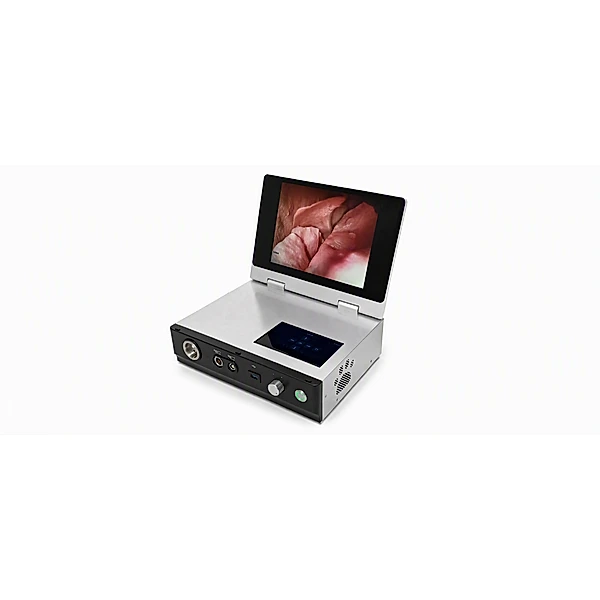
The Dawei AEG-380 is an integrated veterinary endoscopy system designed for clinical endoscopic applications.
When configured with a compatible tracheoscope or bronchoscope, the system can support veterinary airway examination.
Its integrated design brings key endoscopy functions together in one workstation.
Key features include:
- 15.6-inch medical display
- 7-inch touchscreen control
- Integrated 60W LED cold light source
- Image processing and adjustment
- JPG image capture
- MP4 video recording
- Integrated endoscopy workstation design
During canine bronchoscopy, the display provides real-time visualization of the endoscopic field, while image and video recording functions help preserve examination records.
Actual scope compatibility and configuration should be confirmed according to the selected equipment package.
Why Choose an Integrated Veterinary Endoscopy System?
For veterinary clinics and animal hospitals, an integrated endoscopy workstation can help organize the equipment required for clinical examinations.
Compared with assembling separate components, an all-in-one system brings key functions into a unified platform.
The AEG-380 supports:
- Convenient operation through an integrated control interface
- Real-time endoscopic image observation
- Adjustable image presentation
- Clinical image and video documentation
- Multiple endoscopic applications according to scope configuration
These capabilities make it a practical option for veterinary facilities looking for an integrated endoscopy solution.
Gastrointestinal Endoscopy and Bronchoscopy with AEG-380
In addition to airway examination, the AEG-380 can also support gastrointestinal endoscopy when configured with a compatible gastroscope.
These applications serve different clinical purposes:
| Examination | Main Application |
|---|---|
| Canine Bronchoscopy | Visualization of the trachea and accessible bronchial structures |
| Canine Gastrointestinal Endoscopy | Examination of the esophagus, stomach, and accessible upper gastrointestinal tract |
By supporting different compatible endoscopic configurations, the AEG-380 can serve multiple examination needs within veterinary clinical practice.
Conclusion
Canine bronchoscopy is an important endoscopic method for direct visualization of the respiratory tract in dogs. It helps veterinarians examine airway structures, observe visible abnormalities, and document clinical findings.
The Dawei AEG-380 All-in-One Veterinary Endoscopy System combines an integrated display, LED light source, image processing, and recording functions to support veterinary airway and gastrointestinal endoscopy applications.
For veterinary clinics seeking an integrated endoscopy workstation, the AEG-380 offers a versatile platform for compatible clinical examinations.
Post time: Nov-27-2026