


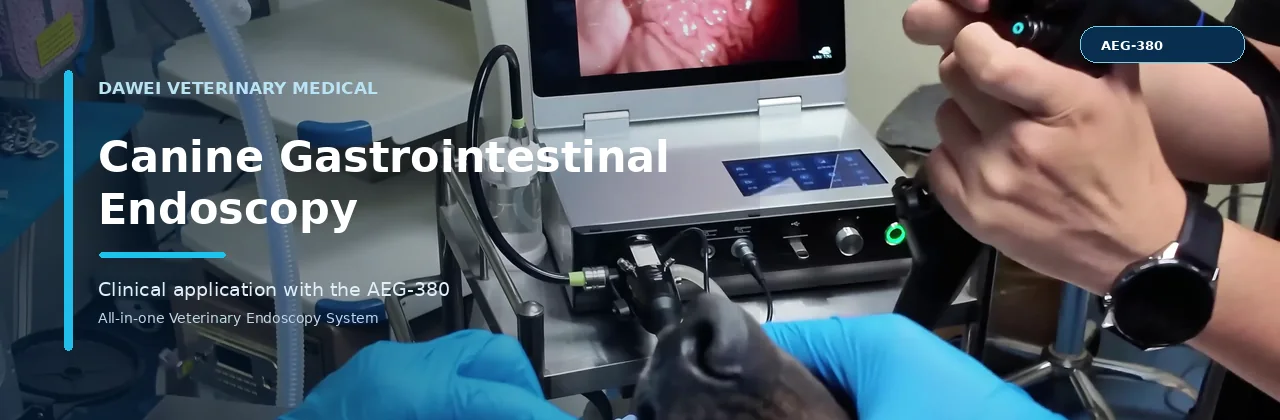
Gastrointestinal problems are common in small animal practice, especially in dogs presenting with chronic vomiting, regurgitation, dysphagia, loss of appetite, or suspected foreign body ingestion. In many cases, imaging and laboratory tests provide useful information, but direct visualization of the digestive tract can offer an additional level of diagnostic value. This is where canine gastrointestinal endoscopy plays an important role.
Veterinary gastrointestinal endoscopy allows clinicians to visually examine the esophagus, stomach, and parts of the intestinal tract with a flexible endoscope. It can help veterinarians assess mucosal surfaces, identify abnormalities, collect biopsy samples, and document findings in real time. For animal hospitals and veterinary clinics seeking a more integrated workflow, an all-in-one system such as the AEG-380 veterinary endoscopy system offers a practical solution for daily clinical use.
What Is Canine Gastrointestinal Endoscopy?
Canine gastrointestinal endoscopy is a minimally invasive procedure used to examine the inner surface of a dog’s digestive tract. By inserting a flexible endoscope through the mouth and advancing it into the esophagus and stomach, veterinarians can observe internal structures on a monitor and evaluate visible lesions or abnormalities.
Compared with exploratory surgery, gastrointestinal endoscopy offers a less invasive way to inspect the digestive tract. It is commonly used in small animal practice when a dog shows persistent gastrointestinal signs and further visualization is needed.
Typical examination targets include:
- The esophagus
- The stomach
- The upper gastrointestinal tract
- Selected accessible areas of the small intestine, depending on scope type and procedure setup
When Is Gastrointestinal Endoscopy Used in Dogs?
Veterinarians may consider gastrointestinal endoscopy in dogs under a variety of clinical circumstances. Common indications include:
- Chronic vomiting
- Regurgitation
- Difficulty swallowing
- Suspected gastrointestinal foreign bodies
- Gastric irritation or mucosal abnormalities
- Follow-up evaluation of ongoing digestive issues
- Collection of endoscopic images and clinical records
In clinical practice, endoscopy is not simply about looking inside the body. It can also support case documentation and help veterinarians communicate findings more clearly with pet owners and clinical teams.
Benefits of Endoscopic Examination in Veterinary Practice
One of the main advantages of veterinary gastrointestinal endoscopy is that it provides real-time visualization of the digestive tract. Instead of relying only on indirect findings, clinicians can directly observe the mucosal surface and monitor the examination on screen.
Key benefits include:
1. Direct Visualization
Endoscopy allows veterinarians to inspect the internal surface of the digestive tract and observe visible changes in texture, color, folds, and luminal structure.
2. Image and Video Documentation
Modern endoscopy systems can capture and store examination images and video for case review, teaching, and communication.
3. Reduced Invasiveness
Compared with more invasive procedures, gastrointestinal endoscopy can provide valuable diagnostic information with a less invasive approach.
4. Better Clinical Workflow
An integrated endoscopy platform can simplify operation, reduce equipment complexity, and improve workflow efficiency in veterinary clinics.
AEG-380 Veterinary Endoscopy System for Canine GI Examination
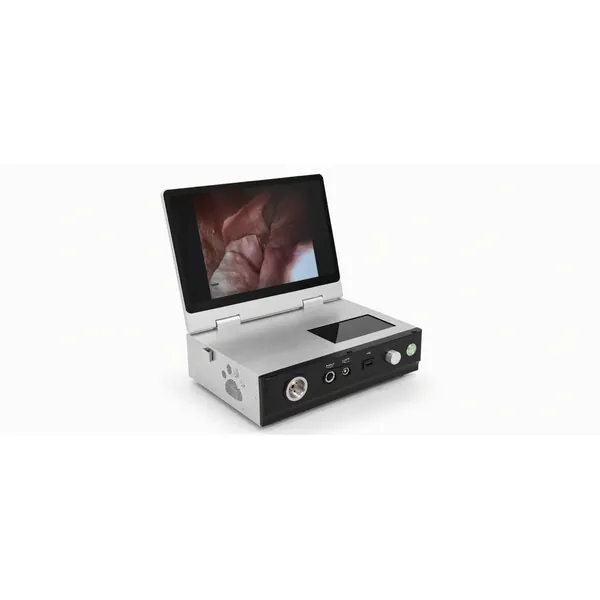
The AEG-380 is an all-in-one veterinary endoscopy system designed to support flexible endoscopic examination in animal hospitals and veterinary clinics. For canine gastrointestinal endoscopy, it offers a practical combination of image display, control, and recording functions in one integrated unit.
For clinics seeking a more compact and organized endoscopy solution, the AEG-380 provides several useful advantages:
- All-in-one integrated design
- Large medical display for real-time observation
- Touchscreen operation for convenient control
- Image capture and video recording
- Support for veterinary clinical examination workflows
- Compatibility with different endoscopic applications, including gastrointestinal and airway examination, depending on configuration
During canine gastrointestinal endoscopy, clear image presentation is especially important. A well-designed system helps clinicians observe the endoscopic field, assess mucosal details, and record valuable clinical information during the procedure.
Why Integrated Imaging Matters
In veterinary endoscopy, image quality and workflow convenience both matter. A system used in daily practice should not only display clear images, but also allow efficient operation during clinical examinations.
The AEG-380 helps address these needs by combining the key functional components of an endoscopy workstation into a single platform. This can be particularly useful in clinics where space, mobility, and operational simplicity are important.
For example, during a canine gastrointestinal examination, the clinician may need to:
- Observe the live endoscopic image
- Adjust viewing conditions
- Capture key images
- Record video for case documentation
- Review findings as part of the diagnostic workflow
An integrated endoscopy system supports these tasks in a more streamlined manner.
Other Flexible Endoscopy Applications
Although this article focuses on canine gastrointestinal endoscopy, the AEG-380 can also be used for other veterinary endoscopic applications depending on the endoscope configuration. In addition to gastrointestinal examination, clinics may also use compatible setups for procedures such as canine bronchoscopy or other flexible endoscopic examinations.
This broader applicability can make the system a useful choice for veterinary practices seeking a versatile endoscopy platform.
Conclusion
Canine gastrointestinal endoscopy is an important tool in modern veterinary diagnosis. It enables direct visualization of the digestive tract, supports real-time assessment, and helps improve clinical documentation. For veterinary clinics looking to enhance endoscopic capability, the AEG-380 veterinary endoscopy system offers an integrated solution for gastrointestinal examination and other flexible endoscopy applications.
With its all-in-one design, real-time display, and image recording capability, the AEG-380 can support daily veterinary endoscopy workflows and help clinicians perform canine gastrointestinal examinations more efficiently.
Post time: Nov-27-2026