


Accurate diagnosis in equine medicine relies heavily on the quality of imaging and the precision of the tools used. For veterinarians specializing in reproduction and abdominal health, selecting the right probe is just as critical as choosing the machine itself. Whether you are performing a routine pregnancy check on a mare or investigating a potential colic case, the clarity of your image dictates your clinical decision.
Modern veterinary practice demands equipment that balances high-resolution imaging with rugged mobility. When paired with the best portable ultrasound machines for vets, specialized rectal probes allow practitioners to visualize subtle changes in ovarian structures, detect early pregnancies, and assess fetal viability with confidence, even in challenging field conditions.
Why probe choice matters in equine imaging
In equine practice, one size does not fit all. The anatomical depth of the mare’s reproductive tract and the vast size of the equine abdomen require probes that can trade off between penetration depth and image resolution. A probe optimized for detailed ovarian mapping may struggle to penetrate deep enough to visualize a late-term fetus or a deep abdominal organ. Furthermore, ergonomics play a vital role; rectal examinations are physically demanding, and a streamlined probe design can significantly reduce strain on both the veterinarian and the horse.
Portability is another non-negotiable factor. Field veterinarians need systems like the Waterproofing Handheld Cattle Equine Ultrasound Y6 or the compact Slite, which are designed to withstand barn environments while delivering hospital-grade imaging.
Resolution vs. Penetration: Higher frequencies (e.g., 7.5 MHz) provide exquisite detail for superficial structures like ovaries but lack depth. Lower frequencies (e.g., 3.5 MHz) are essential for deep abdominal scans.
Ergonomics & Safety: Smooth, rounded rectal probes minimize the risk of rectal tears and improve maneuverability during palpation.
System Integration: Probes must seamlessly interface with units like the Slite. Learning how to set up the Slite ultrasound machine ensures that veterinarians can quickly switch between probes to match the clinical need.
Rectal convex vs. rectal linear: which to use when
The two workhorses of equine reproduction are the rectal linear and rectal convex probes. While they look similar, their imaging physics and ideal applications differ significantly.
| Feature | Rectal Linear Probe | Rectal Convex Probe |
| Frequency Range | High (5.0 – 7.5+ MHz) | Medium-Low (2.0 – 5.0 MHz) |
| Field of View | Rectangular (Straight width) | Fan-shaped (Wider distal field) |
| Primary Use Case | Early pregnancy (Days 14–40), Ovarian follicles, Uterine cysts | Late pregnancy (Fetus drops deeper), General abdominal overview |
| Image Detail | Superior near-field resolution | Better penetration for deep structures |
| Ergonomics | Long, flat footprint | Curved footprint, follows pelvic rim |
| System Match | Standard for routine breeding exams | Ideal for mid-to-late term monitoring |
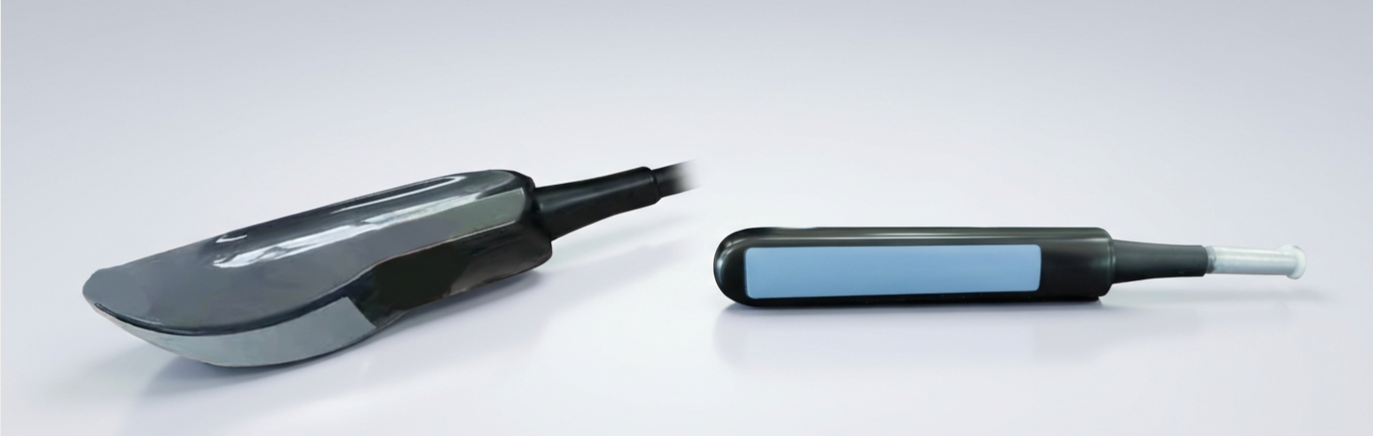
Featured Dawei probes for mares
Dawei Rectal Convex Probe
Designed for versatility, the Dawei Rectal Convex probe is the go-to tool for mid-to-late gestation examinations. Its curved array widens the field of view at depth, allowing veterinarians to visualize the fetus as it descends over the pelvic brim.
Wide Sector: Fan-shaped beam captures larger abdominal structures in a single frame.
Deep Penetration: Lower frequency options penetrate dense tissue, making it ideal for checking fetal fluids and placental health.
Dawei Rectal Linear Probe
The standard for precision reproductive management, this linear probe delivers crystal-clear images of the ovaries and uterus. It is indispensable for confirming the 14-day embryonic vesicle and detecting twins.
High Definition: Optimized for superficial clarity, ensuring no 2mm cyst or follicle is missed.
Ergonomic Grip: Streamlined handle design facilitates easy rotation for thorough rectal sweeps.
Probe selection quick guide
To maximize diagnostic accuracy, match your probe to the specific gestational timeline and clinical task:
Days 14–20 (Early Pregnancy): Use Rectal Linear to detect the embryonic vesicle and rule out twins.
Days 25–40 (Heartbeat): Use Rectal Linear to visualize the heartbeat and embryonic attachment.
Days 60–80 (Fetal Sexing): Use Rectal Linear or Rectal Convex to locate the genital tubercle.
Late Term (Placental Health): Use Rectal Convex to measure CTUP (Combined Thickness of Uterus and Placenta).
Abdominal/Colic Assessment: Use Convex (abdominal) or Rectal Convex for deeper organ scanning.
Farm Workflow: For rapid batch pregnancy checks, a lightweight Rectal Linear reduces arm fatigue.
Selecting the right probe is the key to unlocking the full potential of your veterinary practice. Whether you need the precision of a linear array for early twin management or the depth of a convex probe for late-term assessments, Dawei Veterinary Medical offers a range of durable, high-performance options. By combining these probes with the best portable ultrasound machines for vets, such as the Y6 handheld system, practitioners can ensure accurate diagnoses and better health outcomes for their equine patients. Contact Dawei Veterinary Medical today to customize a probe configuration that fits your specific breeding or clinical needs.
Post time: Jan-20-2026