


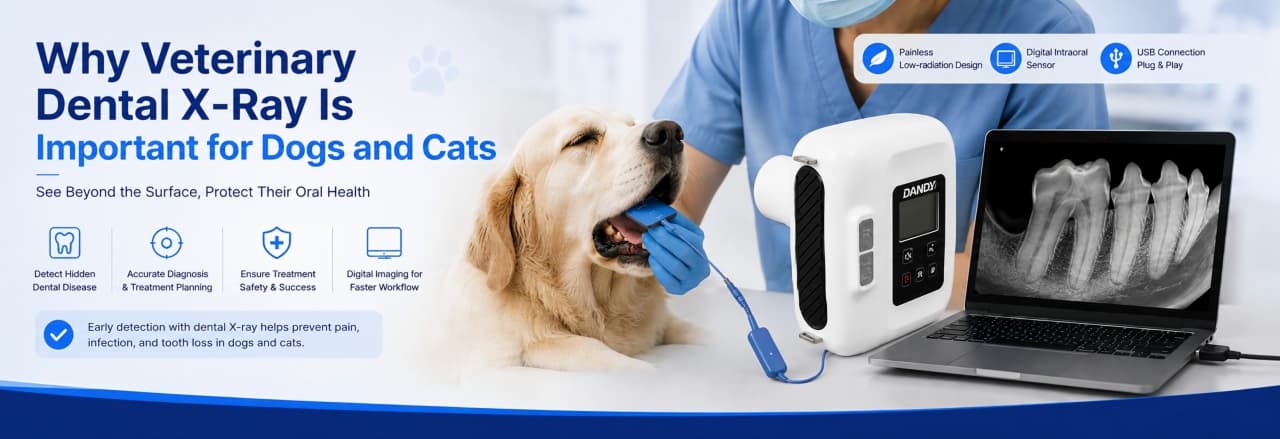
Why Veterinary Dental X-Ray Is Important for Dogs and Cats
Dental disease is one of the most common health problems in companion animals. Studies have shown that most dogs and cats develop some degree of periodontal disease by the age of three, yet many serious dental conditions remain invisible during a routine oral examination.
A veterinary dental X-ray allows veterinarians to examine structures hidden beneath the gum line, including tooth roots, alveolar bone, periodontal tissues, and surrounding anatomical structures. These images provide essential information for accurate diagnosis, treatment planning, tooth extraction, and post-operative evaluation.
Modern digital veterinary dental radiography has become a standard diagnostic tool in veterinary hospitals, specialty dental clinics, and advanced companion animal practices.
Why Is Dental X-Ray Necessary in Veterinary Medicine?
Unlike human patients, dogs and cats cannot communicate oral pain clearly. Many dental diseases progress silently until they become severe.
A veterinary dental X-ray system enables clinicians to detect problems that cannot be identified through visual examination alone.
Common hidden abnormalities include:
- Periodontal disease
- Tooth root abscesses
- Tooth root fractures
- Retained tooth roots
- Tooth resorption
- Impacted teeth
- Jaw bone lesions
- Oral tumors
- Endodontic disease
Without dental radiography, many of these conditions may remain undiagnosed.
Common Clinical Applications of Veterinary Dental X-Ray
Digital dental radiography supports almost every stage of veterinary dental treatment.
Pre-extraction Evaluation
Before extracting a tooth, veterinarians evaluate:
- Root morphology
- Root curvature
- Bone loss
- Tooth ankylosis
- Root resorption
Proper evaluation helps reduce surgical complications.
Periodontal Disease Assessment
Dental X-ray reveals:
- Alveolar bone loss
- Furcation involvement
- Pocket depth
- Root exposure
These findings guide periodontal treatment and long-term management.
Tooth Fracture Diagnosis
External crown damage often does not reflect the condition of the root.
Dental radiographs help identify:
- Root fractures
- Pulp exposure
- Apical lesions
- Internal resorption
This information determines whether extraction or root canal treatment is appropriate.
Oral Surgery Planning
Veterinary dental radiography is widely used before:
- Tooth extraction
- Oral tumor surgery
- Jaw fracture repair
- Orthodontic procedures
Radiographic images improve surgical accuracy while minimizing trauma.
Why Digital Veterinary Dental X-Ray Is Better Than Traditional Film
Many veterinary clinics have transitioned from conventional dental film to digital imaging.
Digital veterinary dental X-ray offers several advantages:
| Traditional Film | Digital Dental X-Ray |
|---|---|
| Film processing required | Instant image acquisition |
| Chemical development | No chemicals needed |
| Lower workflow efficiency | Faster clinical workflow |
| Difficult image storage | Digital image management |
| Limited image enhancement | Zoom, measurement, image optimization |
Digital systems significantly improve diagnostic efficiency while reducing examination time for patients.
Portable Veterinary Dental X-Ray Systems Improve Clinical Workflow
Portable veterinary dental X-ray systems have become increasingly popular because they combine mobility with high-quality imaging.
Compared with traditional wall-mounted equipment, portable systems offer:
- Lightweight handheld generator
- Flexible positioning
- Fast image acquisition
- Lower radiation exposure
- Easy movement between examination rooms
- Suitable for mobile veterinary practice
When combined with a digital intraoral sensor, clinicians can immediately review images, repeat exposures if necessary, and communicate findings with pet owners.
For veterinary hospitals looking for a compact imaging solution, our Portable Veterinary Dental X-Ray System with Digital Intraoral Sensor provides high-definition dental imaging, lightweight portability, and efficient digital workflow for dogs and cats.
Proper Positioning Is Critical for Accurate Dental Imaging
Image quality depends not only on the equipment but also on proper positioning.
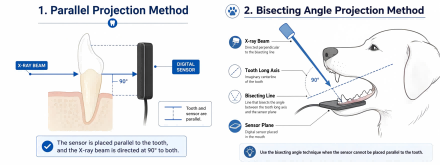
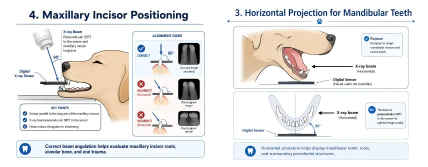
Common positioning techniques include:
- Parallel Projection Method
- Bisecting Angle Technique
- Horizontal Projection
- Maxillary Incisor Positioning
Correct positioning reduces image distortion and improves visualization of tooth roots, periodontal tissues, and surrounding bone structures.
How to Choose the Right Veterinary Dental X-Ray System
When selecting a veterinary dental radiography system, veterinarians should consider:
Image Quality
High-resolution imaging is essential for detecting subtle root lesions and periodontal changes.
Digital Sensor Performance
Choose a digital intraoral sensor with a small pixel size and fast image transmission.
Portability
Portable systems provide greater flexibility for small animal clinics, specialty dental hospitals, and mobile veterinary services.
Radiation Safety
Low-dose exposure helps improve safety for both patients and veterinary staff.
Workflow Integration
USB-connected digital sensors simplify image acquisition and support digital patient record management.
Frequently Asked Questions
Do dogs and cats really need dental X-rays?
Yes. More than half of the tooth structure lies below the gum line and cannot be evaluated visually.
Can dental X-rays detect periodontal disease?
Yes. Dental radiographs are essential for assessing alveolar bone loss, root health, and periodontal disease severity.
Is digital veterinary dental X-ray safe?
Modern veterinary dental X-ray systems use low radiation doses while providing high-quality diagnostic images when operated according to safety guidelines.
What animals can use veterinary dental X-ray?
Digital veterinary dental radiography is primarily used for:
- Dogs
- Cats
- Rabbits
- Ferrets
- Exotic companion animals
Conclusion
Veterinary dental X-ray has become an indispensable part of modern companion animal dentistry. By revealing structures hidden beneath the gum line, digital radiography enables earlier diagnosis, more accurate treatment planning, and improved clinical outcomes.
Whether performing routine dental examinations, periodontal treatment, tooth extraction, or oral surgery, a high-quality digital veterinary dental X-ray system helps veterinarians deliver safer, faster, and more precise care for dogs and cats.
Post time: Jul-09-2026