


Veterinary endoscopy has become an essential diagnostic and minimally invasive treatment tool in modern animal hospitals. Whether used for gastrointestinal examination, removal of foreign bodies, respiratory evaluation, or reproductive health checks, endoscopy helps veterinarians work more accurately, safely, and efficiently.
However, many clinics still hesitate to adopt or upgrade their endoscopy system due to concerns about image quality, compatibility, durability, or cost.
This article explains the common problems clinics face with veterinary endoscopes, what features matter most, and how the AEG-200 Veterinary Endoscopy System offers a complete and practical solution for small-animal and large-animal practice.
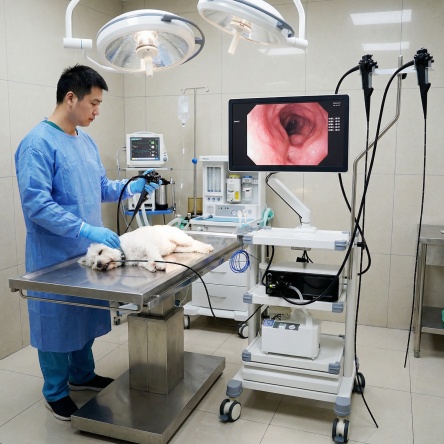
Common Challenges in Veterinary Endoscopy
1. Insufficient Image Clarity
One of the biggest frustrations for veterinarians is a blurry or low-resolution image.
Poor image quality can lead to:
-
Misdiagnosis
-
Difficulty identifying lesions, bleeding points, or small mucosal changes
-
Reduced surgical precision
Clinics need full HD resolution with optimized color and structure enhancement for reliable diagnosis.
2. Weak or Uneven Illumination
Some endoscopes fail to provide consistent light in deeper cavities, especially in large animals.
Insufficient lighting results in:
-
Dark corners or blind spots
-
Difficulty navigating narrow or curved anatomy
-
Longer procedure time
Veterinarians require high-power LED illumination with adjustable light levels.
3. Limited Bending Angles and Maneuverability
Rigid or poorly designed insertion tubes make procedures challenging.
Common complaints include:
-
Can’t reach target areas
-
Cannot bypass anatomical curves
-
Increased discomfort for animals
-
Higher risk of mucosal injury
Good endoscopes must offer precise 360° flexible steering with large angulation ranges.
4. Small Working Channels
Some endoscope models can only support thin tools, restricting the types of procedures veterinarians can perform.
Clinics often need:
-
Larger biopsy forceps
-
Retrieval devices for foreign bodies
-
Flushing/cleaning attachments
This requires wide compatibility and larger working channels.
5. Short Device Lifespan or Poor Durability
Veterinary environments involve:
-
Frequent cleaning
-
Exposure to liquids
-
Repeated bending
Low-grade scopes may suffer from water leakage, broken pixels, or mechanical failure.
A reliable system must include:
-
IP67 waterproofing
-
Anti-corrosion materials
-
Long-life LED lighting
6. Complicated Operation and Not Enough Training
A system that is too complex discourages use.
Veterinarians prefer:
-
Intuitive touch-screen settings
-
Quick white balance
-
One-button video recording and image freeze
-
Automatic detection of connected scopes
Introducing the AEG-200 Veterinary Endoscopy System
The AEG-200 is a new-generation veterinary endoscopy platform designed specifically to address the pain points above. It is engineered for small-animal and large-animal clinics that demand clarity, stability, durability, and operator-friendly design.
Below are the standout advantages of the AEG-200.
Key Advantages of AEG-200
1. Full HD 1920×1200 Resolution for Crystal-Clear Imaging
AEG-200 delivers:
-
High-definition 1080P output (50/60Hz)
-
Multiple resolution options (720P, 1024×768, 1280×960, 1440×900)
-
Enhanced structure and color processing
-
Electronic image zoom
Every vascular detail, mucosal texture, and lesion boundary becomes visible—helping veterinarians diagnose with confidence.
2. Dual LED Lighting With 5-Level Brightness Control
The system uses dual high-intensity LED lamps, offering:
-
Strong, stable illumination
-
Five easily adjustable brightness levels
-
Clear visibility even in deep cavities
Ideal for challenging environments like large dogs, horses, or lengthy GI tracts.
3. 360° Omni-Directional Steering and Large Angulation
The AEG-200 endoscope features highly flexible bending capabilities:
-
Up: ≥210°
-
Down: ≥90°
-
Left/Right: ≥100°
This eliminates blind spots and allows easy navigation through anatomical curves.
Perfect for retrieving foreign bodies or conducting thorough GI examinations.
4. Lightweight Ergonomic Handle for Comfortable Operation
Special ergonomic engineering provides:
-
Comfortable grip for long procedures
-
Intuitive button layout
-
Precise control with minimal fatigue
Veterinarians can perform operations more accurately and smoothly.
5. Large Working Channels for Broader Surgical Compatibility
Available options:
-
3.2 mm channel for gastroscopes
-
4.2 mm channel for colonoscopes
Allows use of:
-
Larger biopsy tools
-
Foreign body graspers
-
High-flow flushing devices
This greatly expands the range of procedures a clinic can offer.
6. IP67 Waterproof Lens and Durable Construction
The insertion tube is:
-
Water-sealed
-
Anti-corrosive
-
Oil-resistant
LED lifetime lasts up to 30,000 hours, reducing maintenance cost and downtime.
7. Smart Control System With Touch Screen Interface
The AEG-200 integrates:
-
Touch-screen control
-
Quick white balance
-
One-button image freeze
-
One-button video recording
-
Automatic endoscope recognition
-
HDMI & DVI dual output
-
USB and TF card storage
It works seamlessly with most monitors and hospital workstations.
8. Wide Model Range for Different Animals
Scope options include:
-
3.0 mm × 600 mm (small animals, exotic pets)
-
6.0 mm × 1000 mm
-
8.8 mm × 1500 mm
-
12.8 mm × 3000 mm (large animal GI examination)
From cats and dogs to cattle, sheep, horses, and alpacas—the AEG-200 covers all applications.
Why the AEG-200 Is Ideal for Veterinary Clinics
By combining high-definition imaging, strong illumination, advanced flexibility, and durable construction, the AEG-200 is designed to be a long-term, all-department solution for veterinary hospitals.
Clinics benefit from:
-
More accurate diagnosis
-
Faster procedures
-
Safer interventions
-
Wider surgical capability
-
Longer device lifespan
-
Lower maintenance cost
Conclusion
Veterinary endoscopy continues to evolve, and clinics need equipment that keeps pace with modern medical standards.
If your clinic struggles with poor image quality, fragile scopes, limited tools, or complicated operation, upgrading to the AEG-200 Veterinary Endoscopy System can dramatically improve your diagnostic and surgical efficiency.
AEG-200 is designed for clarity, durability, and ease of use—empowering veterinarians to provide safer and more precise care for every animal.
Post time: Dec-04-2025