


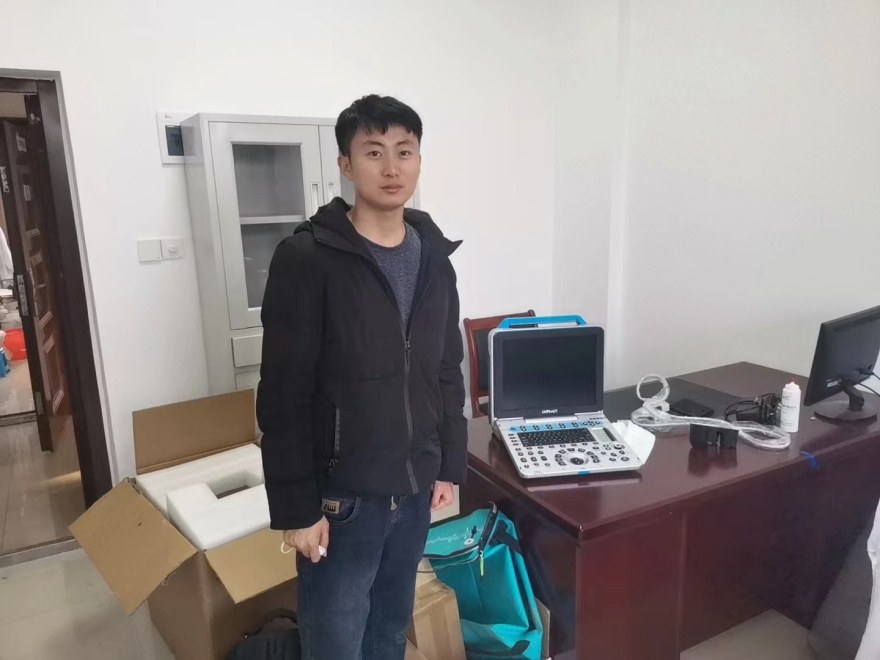
Customer Case: Hunan Fisheries Science Institute, China
Product Used
P3-VET Veterinary Color Doppler Ultrasound Diagnostic System
Customer Type
Aquatic research institute / fishery science organization / breeding and applied research institution
Project Location
Changsha, Hunan, China
Application Scenario
Aquatic animal research, breeding observation, non-invasive imaging, reproductive assessment support, and research data documentation
Executive Summary
Hunan Fisheries Science Institute is a professional fishery research organization in Changsha, China. Public information shows that the institute has long focused on fish breeding, aquatic disease prevention and control, aquatic feed, special aquaculture, freshwater pearl culture, large-water fishery enhancement, and aquatic product processing research and application.
For such a research-oriented customer, imaging equipment needs to be practical, flexible, and suitable for repeated observation in scientific work. The P3-VET veterinary color Doppler ultrasound system provides a useful imaging tool for animal research institutes, breeding bases, and veterinary-related application scenarios. With its portable design, high-resolution display, dual probe interface, and advanced imaging technologies, the P3-VET can help research teams carry out non-invasive observation and improve the documentation of animal imaging results.
This case explains how the P3-VET can support a fishery research institute in daily research, breeding observation, and aquatic animal health-related workflows.
Project Background
Aquatic research institutions often work with a wide range of animal subjects and research tasks. In fishery science, researchers may need to observe breeding status, evaluate animal condition, support experimental comparison, or document physiological changes during research and cultivation programs. Traditional observation methods can be limited when researchers need internal information without causing unnecessary stress or damage to the animal.
For a customer such as Hunan Fisheries Science Institute, a practical imaging system should support more than one use case. It should be suitable for research observation, breeding-related examination, comparative studies, and image documentation. Because aquatic research work may involve different animal sizes, different experimental stages, and changing observation needs, the equipment also needs to be flexible enough for multiple scenarios.
The P3-VET veterinary color Doppler ultrasound system fits this type of requirement. It is designed for animal research institutes, veterinary clinics, breeding and propagation bases, and other diagnostic scenarios. Its portable structure and imaging functions make it suitable for customers that need a balance between image quality, mobility, and research workflow efficiency.
Project Challenges
1. Aquatic Research Requires Non-Invasive Observation Tools
In fishery and aquaculture research, repeated observation is often necessary. Researchers may need to follow changes over time, compare different breeding groups, or observe animal condition during research projects. A non-invasive imaging method can help reduce unnecessary interference while still providing useful internal reference information.
2. Different Aquatic Species and Research Tasks Require Flexible Imaging
A fishery research institute may not focus on only one animal species or one fixed examination purpose. Research may involve fish, special aquaculture species, breeding animals, or other aquatic subjects. This creates demand for an ultrasound system that can adapt to different observation depths, examination positions, and imaging requirements.
3. Research Workflows Need Clear Imaging and Efficient Operation
In a research environment, imaging equipment must support efficiency. Operators need clear images, easy adjustment, and a stable workflow. If image optimization takes too long or operation is complicated, it can reduce research efficiency, especially when repeated examinations or batch observations are required.
4. Image Documentation Matters for Research Review
Research work does not end at the moment of examination. Images may need to be reviewed, compared, archived, or used as reference materials for internal discussion. Therefore, the system needs to support practical image acquisition and documentation, helping research teams build a more traceable imaging workflow.
Why the P3-VET Was a Good Fit
The P3-VET is a veterinary color Doppler ultrasound diagnostic system designed for multiple animal imaging scenarios, including animal research institutes and breeding bases. For Hunan Fisheries Science Institute, its value lies in supporting non-invasive imaging and practical research workflow needs.
Key advantages include:
- 15-inch high-resolution display for clearer image observation
- 0-30° adjustable display angle for more flexible viewing during examination
- Fully activated dual probe interface for more convenient probe switching
- High-capacity removable lithium battery for flexible use in different working areas
- Spatial composite imaging to enhance contrast, fine resolution, and spatial resolution
- Pure wave probe technology to improve fine tissue resolution and boundary clarity
- Advanced probe materials for improved imaging performance compared with traditional materials
- Data processing capability including high-precision A/D conversion and image post-processing
These features make the P3-VET suitable for research users who need both practical mobility and dependable imaging performance.
How the P3-VET Can Support Aquatic Research
1. Support Reproductive and Breeding Observation
For aquatic breeding research, ultrasound imaging can assist with observation related to reproductive condition and breeding-stage evaluation. In a research institute setting, the P3-VET can support non-invasive reference imaging during breeding research, helping researchers observe internal structures and improve the continuity of follow-up work.
2. Assist Health and Condition Assessment of Aquatic Animals
Fishery research often requires attention to animal health, internal condition, and experimental response. The P3-VET can provide imaging support for observing selected internal structures of research animals, giving researchers an additional reference tool during routine research or project-based evaluation.
3. Improve Research Documentation and Image Review
With clearer ultrasound imaging and digital workflow support, the P3-VET can help research teams collect and review image materials more efficiently. This is valuable for internal communication, comparative observation, and long-term project documentation.
4. Provide Flexible Use Across Research Sites
Because aquatic research work may take place in laboratories, breeding areas, or applied research sites, portability matters. The P3-VET’s compact structure and removable battery support make it easier to move the system when needed, improving flexibility for different research tasks.
5. Support Teaching, Training, and Demonstration
Research institutes often carry out technical exchange, training, and demonstration activities. A clear, portable color Doppler ultrasound system can help present imaging results to students, technicians, or research team members more directly, making it useful not only for examination but also for knowledge transfer.
Implementation-Oriented Value
For Hunan Fisheries Science Institute, the practical value of the P3-VET can be understood through three layers.
First, it provides a non-invasive imaging option for aquatic animal observation. This is meaningful in research work where repeated observation and animal welfare both matter.
Second, it improves operational flexibility. Instead of relying only on fixed equipment or destructive observation methods, researchers can use a portable ultrasound system as part of a more flexible research workflow.
Third, it supports more standardized data collection. When imaging results can be reviewed and documented, research teams can better compare findings across different subjects, time points, or project stages.
Project Results
More Flexible Imaging Support for Research Work
The P3-VET gives the research team a practical imaging tool that can be used across different scenarios, including breeding observation, health-related reference imaging, and research documentation.
Better Support for Non-Invasive Observation
By providing ultrasound-based internal observation, the system can help reduce reliance on more invasive methods in suitable scenarios. This supports a more animal-friendly and research-efficient workflow.
Improved Image Review and Research Communication
Clearer images and a practical display workflow make it easier for researchers to review findings, discuss observations, and use imaging results as part of internal project communication.
Stronger Fit for Fishery Research and Breeding Applications
Because the P3-VET is designed for animal research institutes and breeding bases, it aligns well with the needs of a fishery science customer that works across breeding, applied research, and aquatic animal observation.
Technical Highlights of the P3-VET
- Veterinary color Doppler ultrasound diagnostic system
- 15-inch high-resolution display
- 0-30° adjustable display angle
- Fully activated dual probe interface
- High-capacity removable lithium battery
- Spatial composite imaging
- Pure wave probe technology
- Advanced composite probe materials
- High-precision A/D conversion
- Image post-processing capability
- Suitable for animal research institutes, veterinary clinics, and breeding bases
FAQ
What is the P3-VET veterinary color Doppler ultrasound system used for?
The P3-VET is used for veterinary and animal research ultrasound imaging. It can support non-invasive examination, breeding observation, internal structure assessment, and image documentation in research, veterinary, and breeding scenarios.
Why is the P3-VET suitable for aquatic research institutes?
Aquatic research institutes often need flexible, non-invasive observation tools for breeding research, animal condition assessment, and project documentation. The P3-VET provides portable ultrasound imaging and practical workflow support for these needs.
Can ultrasound support fishery and aquaculture research?
Yes. In suitable scenarios, ultrasound can provide non-invasive imaging reference for aquatic animal research, breeding observation, and internal condition assessment. The exact application depends on species, body size, probe selection, and research objective.
What makes the P3-VET useful for breeding observation?
The system offers color Doppler ultrasound capability, a high-resolution display, dual probe interface, and advanced imaging technologies. These features help researchers perform clearer and more flexible imaging observation.
Is the P3-VET only for pet hospitals?
No. The P3-VET is also suitable for animal research institutes, breeding and propagation bases, veterinary clinics, and other animal diagnostic or research scenarios.
Conclusion
This customer case shows how the P3-VET veterinary color Doppler ultrasound system can support the needs of a professional aquatic research organization in China. For Hunan Fisheries Science Institute, the system can provide practical value in non-invasive imaging, breeding observation, animal condition assessment, and research data documentation.
As fishery science and aquaculture research continue to emphasize precision, efficiency, and animal-friendly observation methods, portable veterinary ultrasound systems such as the P3-VET can become valuable tools for research institutes, breeding bases, and applied aquatic science organizations.
Post time: Jul-01-2026